
Language
Search
Pain Point:
For manufacturers and users of medium and high viscosity lubricating oils, water contamination is inevitable during actual service — whether from moisture ingress during equipment operation or condensate during storage and transportation. Once the oil becomes emulsified, its lubricating performance deteriorates sharply: oil film strength weakens, equipment wear accelerates, and severe failures such as bearing seizure or hydraulic system malfunction may occur. How can you accurately evaluate the oil-water separation capability of lubricating oils after mixing with water, ensuring that products can separate water quickly and completely under real-world conditions?
Our Solution:
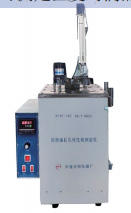
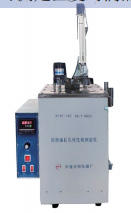
The DFYF-107 Lubricating Oil Demulsibility Tester is strictly designed and manufactured in accordance with GB/T 8022 Determination of Demulsibility Performance of Lubricating Oils. It is specifically used to determine the demulsibility performance of medium and high viscosity lubricating oils — i.e., the ability of the oil to separate from water quickly and completely. The instrument features a combination of a digital temperature controller, solid-state relay, and heater, providing a temperature range from ambient to 99.9°C with accuracy of ±1°C. The stirring motor delivers 92W power with 0~6000 r/min continuously adjustable speed. The stirring unit can be adjusted vertically and horizontally to accommodate different separatory funnel sizes. The instrument is equipped with 2 test stations for parallel testing of two samples simultaneously.
Customer Value:
You no longer need to worry about equipment failures caused by oil emulsification. The DFYF-107 provides a comprehensive demulsibility testing solution featuring precise temperature control (±1°C), powerful adjustable stirring (0~6000 r/min), and 2-station parallel testing — ensuring that the water separation capability of every batch of lubricating oil is verified and validated.
Parameter | Value | Why It Matters to You |
Applicable Standard | GB/T 8022 | Chinese national standard — the authoritative method for demulsibility testing of medium and high viscosity lubricating oils |
Power Supply | AC220V 50Hz | Standard industrial power |
Temperature Control Range | Ambient ~ 99.9°C | Covers standard test temperature (82°C) and custom temperature requirements |
Temperature Control Accuracy | ±1°C | Digital PID regulation — minimal bath temperature fluctuation, excellent repeatability |
Heating Power | 1.6 kW | Rapid heating to test temperature, minimising waiting time |
Stirring Motor Power | 92W | Powerful stirring ensures thorough oil-water mixing |
Stirring Speed | 0 ~ 6000 r/min, continuously adjustable | Adapts to different oil viscosities for optimal mixing |
Stirring Adjustment | Vertically and horizontally adjustable | Flexibly accommodates different separatory funnel sizes, ensuring consistent stirring results |
Number of Test Stations | 2 stations (with separatory funnels) | Enables parallel testing of two samples simultaneously, improving efficiency |
Temperature Control Method | Digital temperature controller + solid-state relay | Contactless temperature control, long service life, stable and uniform bath temperature |
Common Test Temperature | 82°C | Primary test temperature specified by the standard method |
Specifically Designed for Medium and High Viscosity Lubricating Oil Demulsibility Testing
The DFYF-107 is strictly designed and manufactured in accordance with GB/T 8022 Determination of Demulsibility Performance of Lubricating Oils, specifically for determining the demulsibility performance of medium and high viscosity lubricating oils. GB/T 8022 applies to medium and high viscosity lubricating oils (such as industrial gear oils, marine lubricating oils, etc.), complementing GB/T 7305 (which applies to light lubricating oils). The instrument accurately simulates the emulsification and separation process when lubricating oils are mixed with water during actual service, delivering reliable and realistic results.
2-Station Separatory Funnel Design – Increases Testing Efficiency
The instrument is equipped with 2 test stations, allowing parallel testing of two samples simultaneously. This design not only saves testing time but also facilitates comparative analysis — whether verifying repeatability of samples from the same batch or comparing the demulsibility performance of different formulations, both can be accomplished concurrently, significantly improving laboratory efficiency.
Wide-Range Precise Temperature Control – ±1°C, Stable and Reliable
The instrument features a digital temperature controller combined with a solid-state relay and heater for automatic constant temperature control. The temperature range is ambient to 99.9°C with accuracy of ±1°C. The solid-state relay provides contactless temperature control with long service life and high reliability. The bath temperature remains uniform and stable, ensuring that every data set is obtained under identical temperature conditions with excellent repeatability.
Powerful Adjustable Stirring System – 0~6000 r/min Continuously Adjustable
The stirring motor delivers 92W power with speed continuously adjustable from 0 to 6000 r/min. Different viscosity oils require different stirring intensities — low-viscosity oils need higher speeds for thorough mixing, while high-viscosity oils require greater torque. The continuously adjustable speed design allows operators to precisely set the stirring speed according to sample characteristics, ensuring consistent test conditions. The stirring unit can be adjusted vertically and horizontally to accommodate different separatory funnel sizes, ensuring consistent stirring results.
Easy Operation and Clear Display
The digital temperature controller allows simple setting and clear reading of the test temperature. The solid-state relay provides contactless, long-life temperature control, and the entire unit operates reliably. The low learning curve enables even novice operators to become proficient quickly.

Scenario 1: Industrial Gear Oil Manufacturer – Quality Control
A major industrial gear oil producer in East China uses the DFYF-107 for demulsibility testing on every batch of L-CKD series gear oils. Following GB/T 8022 at 82°C, 40mL of oil sample and 40mL of distilled water are mixed in a separatory funnel with high-speed stirring for 5 minutes, then allowed to settle while observing oil-water separation time. The 2-station design enables the quality control department to run parallel tests on two samples simultaneously, with consistently good results. The gear oils consistently meet demulsibility requirements, significantly reducing customer complaints related to equipment failures caused by oil emulsification.
Scenario 2: Marine Lubricant R&D Laboratory – Formulation Optimisation
A marine lubricant R&D team uses the DFYF-107 to evaluate the effect of different demulsifier dosages on the demulsibility performance of marine cylinder oils. The continuously adjustable stirring speed allows researchers to simulate oil-water mixing intensities under different operating conditions, precisely evaluating demulsifier effectiveness at various parameters. The vertically and horizontally adjustable stirring unit accommodates different separatory funnel sizes, meeting the diverse experimental requirements of formulation screening.
Scenario 3: Third-Party Testing Laboratory – Commissioned Testing Services
A national-level oil testing centre in North China receives large numbers of industrial lubricating oil samples for demulsibility testing each month. The DFYF-107's 2-station design enables the laboratory to process batch samples efficiently. The 1.6kW heating power ensures rapid heat-up to 82°C, and the ±1°C accuracy of the digital temperature controller guarantees repeatability and reproducibility for every test report. The test data have earned high recognition from clients and CMA assessors.
Scenario 4: Power Industry Oil Supplier – Turbine Oil Demulsibility Verification
A supplier of turbine oils to power plants uses the DFYF-107 to verify the demulsibility performance of every batch. Turbine oils are in long-term contact with steam in turbine systems — if demulsibility is inadequate, oil emulsification, bearing wear, and control system sticking can occur, leading to serious operational issues. The DFYF-107's precise temperature control and powerful stirring system ensure that test conditions strictly comply with GB/T 8022 requirements, providing solid assurance for reliable product performance.
Category | Details |
Established | Since 1978 – over 45 years of experience in petroleum testing instruments |
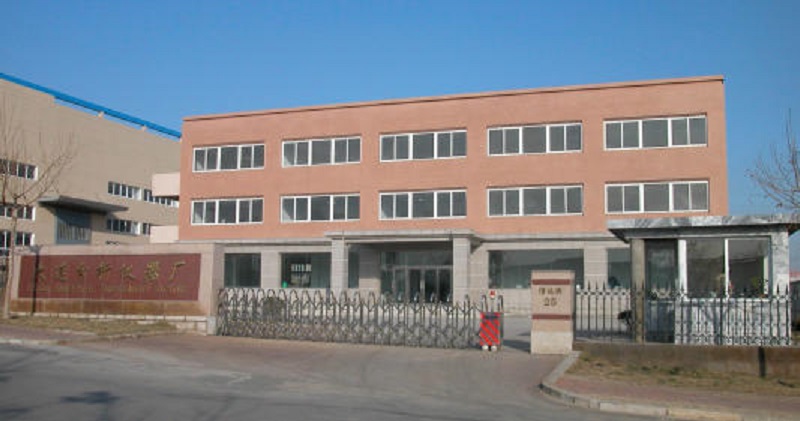
Facility Size | 8,000+ m² modern production base in Dalian High-Tech Zone |
R&D Team | 15+ senior engineers specialising in oil analysis equipment |
Annual Capacity | 500+ units of various petroleum testing instruments |
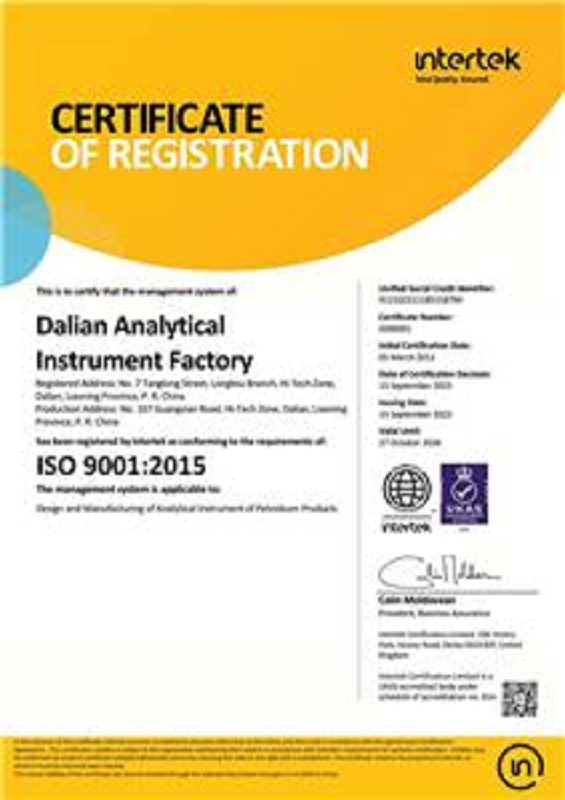
Certifications | ISO 9001:2015 certified; products meet ASTM, ISO, GB/T standards |
Export Markets | Southeast Asia, Middle East, Europe, South America, Africa |
Key Clients | Lubricant manufacturers, third-party testing centres, power industry, marine industry |
Custom Services | OEM/ODM support available |
We don't just sell instruments. We provide complete testing solutions with 48-hour technical support response and lifetime remote assistance.
Standard Compliance: Fully conforms to GB/T 8022 standard
CE Marking: Available upon request (certificate number can be provided)
Calibration Certificate: Each unit comes with a factory calibration report traceable to national standards
Q1: What is the difference between GB/T 8022 and GB/T 7305?
A: GB/T 8022 Determination of Demulsibility Performance of Lubricating Oils applies to medium and high viscosity lubricating oils (such as industrial gear oils, marine lubricating oils, etc.), using a separatory funnel with high-speed stirring. GB/T 7305 Determination of Demulsibility Performance of Petroleum and Synthetic Fluids applies to light lubricating oils and synthetic fluids (such as turbine oils, hydraulic oils, etc.), using a measuring cylinder at lower stirring speeds. The two standards complement each other, covering demulsibility testing across the full viscosity range from light to heavy. The DFYF-107 is designed according to GB/T 8022, specifically for medium and high viscosity lubricating oils.
Q2: Why is demulsibility testing of lubricating oils necessary?
A: Lubricating oils inevitably come into contact with water during service. If demulsibility is poor, water remains emulsified in the oil, forming a stable emulsion. Emulsions can cause: reduced oil film strength (weakened lubrication), additive hydrolysis and deactivation, accelerated equipment wear, filter clogging, and accelerated oil oxidation. Demulsibility testing enables selection of lubricating oil products with good water separation capability, ensuring reliable equipment operation.
Q3: How important is ±1°C temperature control accuracy for this test?
A: Temperature directly affects the oil-water separation rate — higher temperatures accelerate separation (overestimating performance), while lower temperatures slow separation (underestimating performance). The ±1°C accuracy ensures that testing is conducted under the temperature conditions specified by the standard, with data that are truly reliable and comparable across different batches and laboratories.
Q4: What is the practical significance of the 0~6000 r/min continuously adjustable stirring speed?
A: Different viscosity oils require different stirring intensities during testing. High-viscosity oils need higher speeds to achieve thorough oil-water mixing, while low-viscosity oils may undergo excessive emulsification at overly high speeds, affecting result interpretation. The continuously adjustable design enables operators to precisely set the stirring speed for different samples, ensuring consistent test conditions and accurate results.
Q5: What are the benefits of vertically and horizontally adjustable stirring?
A: Different separatory funnels have different dimensions, and the position of the stirring unit in the funnel directly affects stirring effectiveness. The adjustable design ensures that the stirring head can be positioned optimally within the separatory funnel, regardless of the container used, achieving consistent stirring results and ensuring data comparability.
Q6: What are the advantages of the 2-station design over single-station designs?
A: The 2-station design allows parallel testing of two samples simultaneously. This is particularly valuable for quality control laboratories — both samples from the same batch can be tested to verify repeatability, or two different formulations can be tested simultaneously for comparative analysis. It saves time and improves laboratory efficiency.
Q7: What is your delivery time?
A: Standard delivery is 20–25 working days after order confirmation. For urgent needs, please contact us to check current stock.
Q8: What is your warranty policy?
A: 12 months from the date of shipment, excluding consumables (separatory funnels, etc.). Lifetime technical support is included.
Per GB/T 8022, here is the typical procedure for lubricating oil demulsibility testing using the DFYF-107:
Step | Action | Details |
1 | Sample preparation | Measure 40mL of oil sample and 40mL of distilled water into the separatory funnel |
2 | Temperature setting | Set the test temperature to 82°C (standard method specified temperature) via the digital temperature controller |
3 | Bath temperature stabilisation | The bath automatically heats to the set temperature with ±1°C high-precision control |
4 | Install separatory funnel | Place the separatory funnel in the bath test station and adjust the stirring unit to the optimal position |
5 | Set stirring speed | Set the stirring speed according to oil viscosity (0~6000 r/min continuously adjustable) |
6 | Start stirring | Start stirring for 5 minutes (standard method specified duration) |
7 | Settling observation | Stop stirring and record the time required for complete separation of oil, water, and emulsion layers |
8 | Result determination | Evaluate demulsibility performance level based on separation time |
2-station design supports parallel testing; 0~6000 r/min continuously adjustable speed adapts to different oil viscosities; ±1°C precise temperature control ensures reliable data.

You Need | DFYF-107 Delivers |
Standard compliance | GB/T 8022 — demulsibility testing for medium and high viscosity lubricating oils |
Temperature range | Ambient~99.9°C — covers standard test temperature 82°C |
Temperature accuracy | ±1°C — digital PID regulation, stable bath temperature |
Stirring motor | 92W — powerful stirring |
Stirring speed | 0~6000 r/min, continuously adjustable |
Stirring adjustment | Vertically and horizontally adjustable — adapts to different separatory funnels |
Test stations | 2 stations — supports parallel testing |
After-sales support | 12-month warranty + lifetime remote support |
Trust | Established 1978, ISO 9001 certified |
Dalian Analytical Instrument Factory
Carlos Zhang (Overseas Sales Manager)
�� Tel / WhatsApp / WeChat: +86 18740265556
�� Email: 54639288@qq.com
�� Website: https://www.analyzer-dfy.com
�� Address: 1-1, No.107 Guangxian Road, High-Tech Zone, Dalian, Liaoning, China (Zip code: 116023)
We don't write empty words. We provide data, facts, standards, and solutions – because that's what B2B buyers and Google truly value.