
Language
Search
Pain Point:
For lubricating oil manufacturers, R&D institutions, and quality control laboratories, foam characteristics are a critical indicator of lubricating oil quality. In high-speed gearing, large-volume pumping, and splash lubrication systems, the tendency of lubricating oils to generate foam is a serious issue — excessive foam leads to inadequate lubrication, cavitation, and lubricant overflow loss, ultimately causing mechanical failure. However, traditional foam characteristic testing presents numerous challenges: insufficient temperature control accuracy — bath temperature fluctuations directly affect the accuracy of foam volume measurement; inconvenient temperature switching — standard methods require testing at both 24°C and 93.5°C, with manual switching being cumbersome; unstable airflow — air flow fluctuations lead to poor repeatability of bubble volume measurement; reliance on manual timing — manual timing introduces human errors. How can you perform lubricating oil foam characteristic testing efficiently and accurately in the laboratory?
Our Solution:
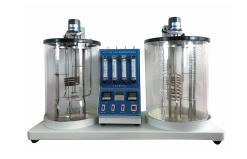
The DFYF-114 Lubricating Oil Foam Characteristic Tester is strictly designed and manufactured in accordance with GB/T 12579 Test Method for Foaming Characteristics of Lubricating Oils and ASTM D892 Standard Test Method for Foaming Characteristics of Lubricating Oils. The instrument features a dual-temperature bath design, precisely controlled by digital temperature controllers with accuracy of ±0.1°C, with preset temperature control points at 24°C and 93.5°C. The heating power is 2.4KW for rapid and efficient heating. The air flow rate is stabilised at 94ml/min ± 5ml/min, ensuring repeatability of bubble volume measurement. Equipped with a digital timer for precise timing, the instrument introduces gas through an air pump or nitrogen cylinder into the flow meter, gas diffusion head, and sample measuring cylinder at a fixed time and quantity to accurately measure the volume of bubbles generated by the sample.
Customer Value:
You no longer need to tolerate unstable temperature control, inaccurate airflow, or cumbersome operation in traditional foam testing. The DFYF-114 provides a comprehensive solution featuring independent dual-temperature bath control (24°C / 93.5°C), ±0.1°C high precision, stable airflow at 94ml/min, and accurate digital timing — making your lubricating oil foam characteristic testing more accurate, more compliant, and more efficient.
Parameter | Value | Why It Matters to You |
Applicable Standards | GB/T 12579, ASTM D892 | Dual compliance ensures global acceptance of test results |
Power Supply | AC220V 50Hz | Stable power supply ensures uninterrupted testing |
Heating Power | 2.4KW | Rapid and efficient heating, shortens preheating time, ensures consistent test conditions |
Stirring Motor Power | 15W | Gentle and efficient stirring ensures uniform temperature distribution in the bath |
Temperature Control Range | Ambient ~ 99.9°C | Covers standard test temperatures; optional refrigeration extends low-temperature range |
Temperature Control Points | 24°C / 93.5°C | Preset to match international standard testing procedures |
Temperature Control Accuracy | ±0.1°C | Laboratory-grade high precision, accurately simulates actual operating temperatures of lubricating oils |
Air Flow Rate | 94ml/min ± 5ml/min | Stable air supply ensures repeatability of bubble volume measurement |
Timer | Digital display | Clear reading and precise timing |
Dual-Temperature Bath with Independent Control – Strictly Compliant with Standard Requirements
ASTM D892 and GB/T 12579 standards require determination of lubricating oil foaming tendency and foam stability at two temperature points: 24°C and 93.5°C. The DFYF-114 features a dual-temperature bath (low-temperature and high-temperature) independently controlled by digital temperature controllers, with preset temperature points at 24°C and 93.5°C — one-touch switching without manual adjustment. An optional refrigeration function further expands the temperature control range to meet more testing scenario requirements.
±0.1°C Ultra-High Temperature Control Accuracy – The Foundation of Reliable Data
The instrument employs a digital temperature controller that precisely controls the heating device through a solid-state relay, achieving temperature control accuracy of ±0.1°C. The operating logic is clear and reliable: when the bath temperature is below the set value, the controller activates the heating device; when the bath temperature exceeds the set value, the controller stops heating while the stirring device continues to operate, ensuring constant and uniform bath temperature. This stable temperature control system effectively eliminates test errors caused by temperature fluctuations, ensuring the authority of test data.
Stable Airflow – 94ml/min ± 5ml/min, Ensuring Repeatability
In foam characteristic testing, the stability of airflow directly affects the repeatability of bubble volume measurement. The DFYF-114 incorporates a precision flow control system that maintains airflow at 94ml/min ± 5ml/min, ensuring consistent air supply conditions for every test and reliable bubble volume measurement results.
Efficient Bubble Volume Measurement – Accurate Foam Characteristic Evaluation
Through an air pump or nitrogen cylinder, gas is introduced into the flow meter, gas diffusion head, and sample measuring cylinder at a fixed time and quantity to accurately measure the volume of bubbles generated by the sample. The test procedure is: after the sample is heated to the specified temperature, air is passed through the sample in a measuring cylinder at a specified flow rate and pressure. The volume of foam generated after 5 minutes of aeration (foaming tendency) and the volume of foam remaining after 10 minutes of settling (foam stability) are recorded. Less foam indicates better anti-foaming performance of the oil. The DFYF-114's precise measurement technology effectively helps you avoid the risk of mechanical failure caused by excessive foaming.
Digital Timer – Precise and Accurate Test Timing
Equipped with a digital timer with clear and intuitive readings, the instrument provides precise timing control during the 5-minute aeration phase and the 10-minute settling phase, eliminating human errors associated with manual timing and ensuring standardisation of the test process.
Compact Design, Easy Operation
The instrument features a compact structure and attractive appearance, suitable for various laboratory spaces. The digital temperature controller and timer simplify the test setup process, allowing even novice operators to get started quickly. The operation manual is provided for reference, reducing operator learning costs and improving daily testing efficiency.
Scenario 1: Lubricating Oil Manufacturer – Batch Quality Control
A major lubricant producer in East China uses the DFYF-114 for foam characteristic testing on every batch of hydraulic oils, gear oils, and engine oils. Following GB/T 12579, testing is performed at 24°C for foaming tendency and foam stability, then at 93.5°C for high-temperature testing, and finally repeated at 24°C. The dual-temperature bath independent control design allows operators to prepare tests at both temperature points simultaneously, significantly reducing batch testing cycles. The ±0.1°C temperature control accuracy ensures comparability of test data across different batches, with product foam characteristics consistently meeting API and OEM specifications.
Scenario 2: Hydraulic Oil R&D Laboratory – Formulation Optimisation
A hydraulic oil R&D team uses the DFYF-114 to evaluate the effect of different anti-foam additive dosages on hydraulic oil foam characteristics. By comparing foam volume data of different formulations at both 24°C and 93.5°C, R&D personnel precisely determined the optimal anti-foam additive dosage, balancing defoaming effectiveness with cost control. The stable airflow system and digital timer ensured the reliability of every data set, accelerating the formulation development process.
Scenario 3: Third-Party Testing Laboratory – High-Volume Commissioned Testing
A national-level oil testing centre in North China receives large numbers of lubricating oil samples for foam characteristic testing each month. The DFYF-114's dual-temperature bath design and digital temperature control system enable the laboratory to process batch samples efficiently, with the 2.4KW heating power ensuring rapid bath heat-up to set temperatures. Test results strictly comply with GB/T 12579 and ASTM D892 standards, earning high recognition from clients and CNAS assessors.
Scenario 4: Gear Oil Manufacturer – Anti-Foam Performance Verification
An industrial gear oil manufacturer uses the DFYF-114 to verify the anti-foam performance of new products in high-speed gear lubrication applications. Following ASTM D892 at 93.5°C, the foaming tendency and foam stability of the oil are determined. Test results showed that the optimised formulation exhibited significantly reduced foam volume at high temperatures, effectively preventing cavitation and lubrication failure risks caused by foaming in high-speed gear lubrication.
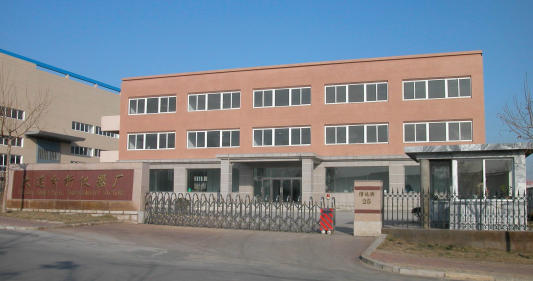
Category | Details |
Established | Since 1978 – over 45 years of experience in petroleum testing instruments |
Facility Size | 8,000+ m² modern production base in Dalian High-Tech Zone |
R&D Team | 15+ senior engineers specialising in oil analysis equipment |
Annual Capacity | 500+ units of various petroleum testing instruments |
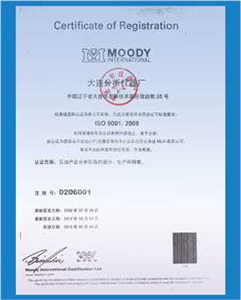
Certifications | ISO 9001:2015 certified; products meet ASTM, ISO, GB/T standards |
Export Markets | Southeast Asia, Middle East, Europe, South America, Africa |
Key Clients | Lubricant manufacturers, third-party testing centres, research institutions, university laboratories |
Custom Services | OEM/ODM support; optional refrigeration function to expand temperature range |
We don't just sell instruments. We provide complete testing solutions with 48-hour technical support response and lifetime remote assistance.
Standard Compliance: Fully conforms to GB/T 12579 and ASTM D892 standards
CE Marking: Available upon request (certificate number can be provided)
Calibration Certificate: Each unit comes with a factory calibration report traceable to national standards
Q1: What is the relationship between GB/T 12579 and ASTM D892?
A: GB/T 12579 is the Chinese national standard "Test Method for Foaming Characteristics of Lubricating Oils", and ASTM D892 is the ASTM International standard "Standard Test Method for Foaming Characteristics of Lubricating Oils". The two are technically equivalent, both evaluating anti-foaming performance by determining foaming tendency and foam stability at 24°C and 93.5°C. The DFYF-114 fully complies with both standards, making test results mutually recognised worldwide.
Q2: What is the principle of the lubricating oil foam characteristic test?
A: The sample is heated to the specified temperature (24°C or 93.5°C), and air is passed through the sample in a measuring cylinder at a specified flow rate (94ml/min) and pressure. The volume of foam generated after 5 minutes of aeration (foaming tendency) and the volume of foam remaining after 10 minutes of settling (foam stability) are recorded. Less foam indicates better anti-foaming performance. This test method is used to evaluate the risk of inadequate lubrication, cavitation, and overflow loss caused by foaming in high-speed gearing, large-volume pumping, and splash lubrication systems.
Q3: Why is testing required at both 24°C and 93.5°C?
A: Lubricating oils are exposed to different temperature environments in actual use — ambient temperature start-up (24°C) and high-temperature operation (93.5°C). Foam characteristics of oils can differ significantly at different temperatures. Testing at both temperature points provides a comprehensive evaluation of anti-foaming performance across the full temperature range, ensuring reliable lubrication protection under all operating conditions.
Q4: How important is ±0.1°C temperature control accuracy for foam characteristic testing?
A: Temperature directly affects oil viscosity and surface tension, which in turn influence foam generation and stability. The ±0.1°C temperature control accuracy ensures that testing is conducted under strictly constant temperature conditions, with foam volume data that are truly reliable. If temperature fluctuates, results become incomparable across different batches and laboratories.
Q5: Why must the airflow be stabilised at 94ml/min ± 5ml/min?
A: Airflow directly affects the number and size of bubbles introduced into the oil sample — excessively high flow rates generate excessive foam (overestimated results), while insufficient flow rates result in inadequate foam generation (underestimated results). The stable airflow of 94ml/min ± 5ml/min is a critical condition for ensuring repeatability and reproducibility of test results.
Q6: What is the practical use of the optional refrigeration function?
A: In certain climatic conditions, laboratory ambient temperatures may exceed 24°C, making it difficult for the low-temperature bath to maintain stable control at 24°C. The optional refrigeration function ensures that the bath can be precisely controlled at 24°C even in high-temperature environments, guaranteeing that test conditions meet standard requirements — particularly suitable for laboratories in tropical or subtropical regions.
Q7: What is your delivery time?
A: Standard delivery is 20–25 working days after order confirmation. For urgent needs, please contact us to check current stock.
Q8: What is your warranty policy?
A: 12 months from the date of shipment, excluding consumables (gas diffusion heads, etc.). Lifetime technical support is included.

Per GB/T 12579 / ASTM D892, here is the typical procedure for lubricating oil foam characteristic testing using the DFYF-114:
Step | Action | Details |
1 | Sample preparation | Pour approximately 200mL of oil sample into a 1000mL measuring cylinder |
2 | Temperature setting | Set the test temperature via the digital temperature controller: 24°C (low-temperature bath) or 93.5°C (high-temperature bath) |
3 | Bath temperature stabilisation | The bath automatically heats/stabilises to the set temperature with ±0.1°C high-precision control; the stirring device ensures uniform temperature |
4 | Aeration test | Introduce 94ml/min of dry air into the sample through the air pump for 5 minutes; the digital timer provides precise timing |
5 | Record foam volume | Immediately after the 5-minute aeration period, record the volume of foam in the measuring cylinder (mL) — foaming tendency |
6 | Settling observation | Stop aeration and allow to settle for 10 minutes; the digital timer provides precise timing |
7 | Record residual foam | After the 10-minute settling period, record the volume of foam remaining in the measuring cylinder (mL) — foam stability |
8 | Temperature switching | Repeat the test at 93.5°C (high-temperature foam characteristics), then repeat at 24°C after cooling |
Dual-temperature bath independent control, ±0.1°C high precision, 94ml/min stable airflow, and accurate digital timing — the DFYF-114 provides a comprehensive foam characteristic testing solution from sample to report.
You Need | DFYF-114 Delivers |
Standard compliance | GB/T 12579, ASTM D892 — recognised globally |
Temperature control points | 24°C / 93.5°C — dual-temperature bath independent control |
Temperature accuracy | ±0.1°C — laboratory-grade high precision |
Heating power | 2.4KW — rapid and efficient heating |
Air flow rate | 94ml/min ± 5ml/min — stable air supply |
Timing method | Digital timer — accurate timing |
Optional function | Refrigeration function expands temperature range |
After-sales support | 12-month warranty + lifetime remote support |
Trust | Established 1978, ISO 9001 certified |
Dalian Analytical Instrument Factory
Carlos Zhang (Overseas Sales Manager)
�� Tel / WhatsApp / WeChat: +86 18740265556
�� Email: 54639288@qq.com
�� Website: https://www.analyzer-dfy.com
�� Address: 1-1, No.107 Guangxian Road, High-Tech Zone, Dalian, Liaoning, China (Zip code: 116023)
We don't write empty words. We provide data, facts, standards, and solutions – because that's what B2B buyers and Google truly value.