
Language
Search
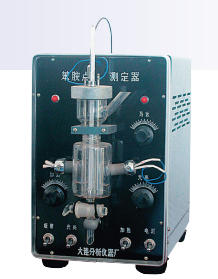
Pain Point:
For petrochemical enterprises, lubricating base oil manufacturers, and solvent oil suppliers, aniline point is a key indicator for evaluating the aromatic hydrocarbon content of petroleum products — it directly relates to oil solubility, rubber compatibility, and seal material suitability. However, traditional aniline point determination relies on manual visual observation of the moment when the solution changes from cloudy to clear. Different operators' judgment variations lead to scattered results; manual timing and recording are tedious, making repeatability difficult to achieve; endpoint determination for dark-coloured oils and complex samples is particularly challenging. How can you determine the aniline point of petroleum products accurately, objectively, and efficiently in the laboratory?
Our Solution:
The DFYF-133 Petroleum Products Aniline Point Tester is strictly designed and manufactured in accordance with GB/T 262 and ISO 2977 standards. Based on the U-tube method principle, when the sample-aniline mixture reaches the aniline point, the solution changes from cloudy to clear. A photoelectric sensor automatically captures this change in light transmittance and determines the endpoint. The temperature control range is 0~150°C, covering the aniline point determination requirements of light solvents through to heavy lubricating base oils. Total input power is only 80W, providing energy-efficient and stable temperature ramping. The compact design occupies minimal bench space.
Customer Value:
You no longer need to tolerate subjective visual judgment errors, difficulties with dark-coloured samples, or poor repeatability in traditional aniline point testing. The DFYF-133 provides a precise aniline point determination solution featuring photoelectric automatic endpoint detection, U-tube circulation mixing, dual-standard compliance (GB/T 262 & ISO 2977), and wide temperature control range (0~150°C) — ensuring that the aromatic hydrocarbon content evaluation of every batch of oil is verified and validated.
Parameter | Value | Why It Matters to You |
Applicable Standards | GB/T 262, ISO 2977 | Dual compliance ensures global acceptance of test results |
Power Supply | AC220V 50Hz | Standard industrial power |
Input Power | 80W | Ultra-low power consumption, energy-efficient and stable temperature ramping |
Temperature Control Range | 0 ~ 150°C | Covers aniline point determination requirements from light solvents to heavy lubricating base oils |
Heating Method | Direct electric heating | Stable temperature rise, precise temperature control |
Heating Power | 40W | Precise heating to avoid overheating |
Detection Principle | U-tube method + photoelectric effect | Automatic endpoint determination, eliminating human observation errors |
Mixing Method | U-tube circulation mixing | Equal volumes of aniline and sample are continuously circulated by a stirrer, ensuring uniform temperature distribution |
Dual-Standard Compliance — Globally Accepted
The instrument strictly complies with GB/T 262 Petroleum products and hydrocarbon solvents — Determination of aniline point and mixed aniline point and ISO 2977 Petroleum products and hydrocarbon solvents — Determination of aniline point and mixed aniline point. Results are internationally recognised, suitable for import/export inspection, arbitration analysis, and scientific research. GB/T 262-2010 was implemented on May 1, 2011, replacing GB/T 262-1988.
Photoelectric Automatic Detection — No More Visual Judgement
The instrument is based on the U-tube method principle. When the sample-aniline mixture reaches the aniline point, the solution changes from cloudy to clear. A photoelectric sensor automatically captures this change in light transmittance and determines the endpoint. During the test, equal volumes of aniline and sample are injected through the inlet port. Driven by the stirrer, the mixed sample flows from the lower section of the side tube through the flat chamber to the upper section, continuously circulating in this manner. The light projector directs light perpendicular to the flat chamber of the side tube, while the photoelectric sensor monitors changes in light transmittance in real time. The entire process requires no manual observation, eliminating human error and delivering excellent repeatability.
U-tube Circulation Mixing — Ensuring Uniformity
Equal volumes of aniline and sample are injected, then continuously circulated from the lower section of the side tube through the flat chamber via a stirrer. This design ensures uniform temperature distribution and complete reaction, leading to more reliable measurements. The U-tube structure allows full contact between the mixed fluids during circulation, avoiding measurement deviations caused by local temperature differences.
Wide Temperature Range — Suitable for Diverse Oil Types
Temperature control range: 0~150°C, covering aniline point determination requirements from light solvents to heavy lubricating base oils. Whether low-boiling solvent oils or high-viscosity lubricating base oils, both can be tested on a single instrument. Direct electric heating provides stable temperature rise and precise temperature control.
Compact and Stable — Reliable Performance
The compact design saves bench space. Direct electric heating (heating power 40W) with total input power of only 80W provides energy-efficient and stable temperature ramping. The instrument features a mature design with rigorously selected key components, ensuring low long-term drift and consistent, reliable laboratory data.
Scenario 1: Lubricating Base Oil Manufacturer – Aromatic Content Quality Control
A major lubricating base oil producer in East China uses the DFYF-133 for aniline point testing on every batch of base oil. A higher aniline point indicates lower aromatic hydrocarbon content and higher paraffinic hydrocarbon content — which directly relates to viscosity index, oxidation stability, and additive solubility. The quality control department uses aniline point data to strictly control base oil specifications, ensuring raw material quality for downstream lubricant blending plants. The photoelectric automatic endpoint detection function ensures highly consistent test data across different operators, significantly improving batch-to-batch quality stability.
Scenario 2: Solvent Oil Supplier – Export Product Inspection
A company engaged in solvent oil import/export uses the DFYF-133 for aniline point testing on every batch of export solvent oil. Testing is conducted in accordance with ISO 2977 to ensure results are consistent with overseas clients and inspection bodies. Dual-standard compliance makes test reports authoritative in international trade. The U-tube circulation mixing design ensures temperature uniformity for highly volatile solvent oils during determination, delivering reliable data.
Scenario 3: Rubber Industry Oil Evaluation Laboratory – Rubber Compatibility Assessment
A rubber product manufacturer's raw material testing laboratory uses the DFYF-133 for aniline point testing of rubber processing oils and extender oils. Aniline point directly reflects oil compatibility with rubber — an excessively low aniline point indicates high aromatic hydrocarbon content, which may cause rubber product swelling and performance degradation. Through aniline point data, the laboratory precisely selected processing oils matching different rubber formulations, effectively improving rubber product quality stability.
Scenario 4: Third-Party Testing Laboratory – Commissioned Testing Services
A national-level oil testing centre in South China receives large numbers of solvent oil, white oil, and lubricating base oil samples for aniline point testing each month. The DFYF-133's wide temperature control range (0~150°C) enables flexible response to different oil types' test temperature requirements. The photoelectric automatic endpoint detection function enables efficient batch testing without operators needing to continuously monitor endpoints. The data consistency and traceability of test reports have earned high recognition from CMA assessors.

Category | Details |
Established | Since 1978 – over 45 years of experience in petroleum testing instruments |
Facility Size | 8,000+ m² modern production base in Dalian High-Tech Zone |
R&D Team | 15+ senior engineers specialising in oil analysis equipment |
Annual Capacity | 500+ units of various petroleum testing instruments |
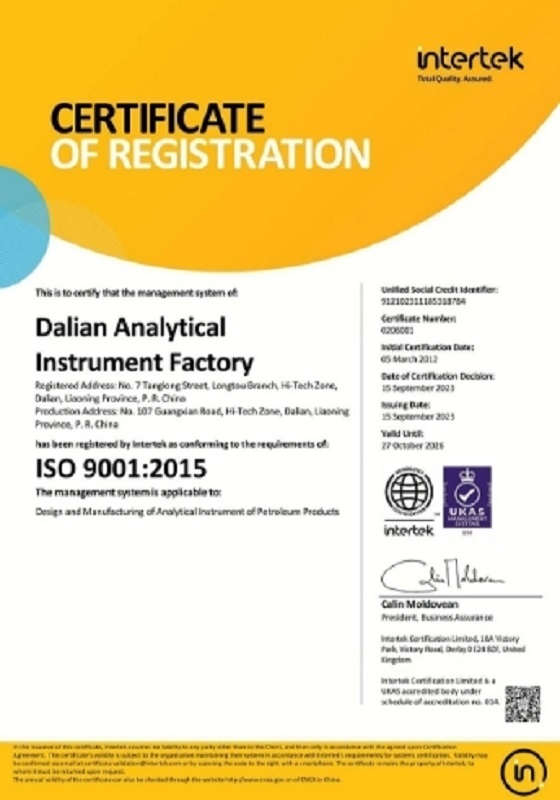
Certifications | ISO 9001:2015 certified; products meet ASTM, ISO, GB/T standards |
Export Markets | Southeast Asia, Middle East, Europe, South America, Africa |
Key Clients | Petrochemical enterprises, lubricating base oil manufacturers, third-party testing centres, rubber industry |
Custom Services | OEM/ODM support available |
We don't just sell instruments. We provide complete testing solutions with 48-hour technical support response and lifetime remote assistance.
Standard Compliance: Fully conforms to GB/T 262 and ISO 2977 standards
CE Marking: Available upon request (certificate number can be provided)
Calibration Certificate: Each unit comes with a factory calibration report traceable to national standards
Q1: What is the relationship between GB/T 262 and ISO 2977?
A: GB/T 262 is the Chinese national standard "Petroleum products and hydrocarbon solvents — Determination of aniline point and mixed aniline point", and ISO 2977 is the corresponding International Organization for Standardization standard. GB/T 262 is a modified adoption of ISO 2977, and the two are technically equivalent. The DFYF-133 fully complies with both standards, making test results mutually recognised worldwide.
Q2: What is aniline point, and why is it important?
A: Aniline point is the lowest temperature at which a petroleum product is completely miscible with an equal volume of aniline. A higher aniline point indicates higher saturated hydrocarbon (paraffinic) content and lower aromatic hydrocarbon content; a lower aniline point indicates higher aromatic content. Aniline point is closely related to oil solubility and rubber compatibility — it is a key indicator for evaluating the quality of solvent oils, lubricating base oils, rubber processing oils, and other products.
Q3: What are the advantages of photoelectric automatic detection over manual visual observation?
A: Traditional methods rely on operators visually observing the moment the solution changes from cloudy to clear. Different operators' reaction times and judgment standards lead to scattered results; endpoints for dark-coloured oils are nearly impossible to discern. The photoelectric sensor automatically captures changes in light transmittance and determines the endpoint, unaffected by operator subjectivity or sample colour. Results are objective, accurate, and repeatable.
Q4: What is the advantage of the U-tube circulation mixing design?
A: During the test, equal volumes of aniline and sample are injected through the inlet port. Driven by the stirrer, the mixed sample flows from the lower section of the side tube through the flat chamber to the upper section, continuously circulating. This design ensures thorough mixing of aniline and sample and uniform temperature distribution, avoiding measurement deviations caused by local temperature differences. Compared to static mixing, U-tube circulation mixing ensures more complete reaction and more reliable results.
Q5: What oil types does the 0~150°C temperature control range cover?
A: Light solvent oils (such as No. 6 extraction solvent oil) typically have aniline points in the range of 60~70°C; medium solvent oils (such as No. 120 rubber solvent oil) in the range of 70~80°C; lubricating base oils, depending on the degree of refining, typically have aniline points between 80~120°C. The DFYF-133's 0~150°C temperature control range covers aniline point determination requirements for all product types from light to heavy.
Q6: What is your delivery time?
A: Standard delivery is 20–25 working days after order confirmation. For urgent needs, please contact us to check current stock.
Q7: What is your warranty policy?
A: 12 months from the date of shipment, excluding consumables. Lifetime technical support is included.

Per GB/T 262 / ISO 2977, here is the typical procedure for aniline point determination using the DFYF-133:
Step | Action | Details |
1 | Sample preparation | Prepare the test oil sample and aniline reagent, ensuring both are transparent and free of suspended matter |
2 | Injection and mixing | Inject equal volumes (typically 5mL each) of aniline and test oil through the inlet port into the U-tube |
3 | Start circulation | Start the stirrer; the mixed liquid continuously circulates from the lower section through the flat chamber |
4 | Start heating | Start heating at the specified rate (typically 2~3°C/min) |
5 | Real-time monitoring | The light projector directs light perpendicular to the flat chamber; the photoelectric sensor continuously monitors light transmittance |
6 | Endpoint determination | When the mixture reaches the aniline point, the solution changes from cloudy to clear; the photoelectric sensor automatically captures the change in light transmittance and determines the endpoint |
7 | Record result | The system automatically records the endpoint temperature — this is the aniline point of the oil sample |
Photoelectric automatic endpoint determination eliminates human observation errors; U-tube circulation mixing ensures uniform temperature; 0~150°C wide temperature range covers all oil types.
You Need | DFYF-133 Delivers |
Standard compliance | GB/T 262, ISO 2977 — recognised globally |
Detection method | Photoelectric automatic endpoint determination — no more visual observation |
Mixing method | U-tube circulation mixing — uniform temperature, complete reaction |
Temperature range | 0~150°C — full coverage from light to heavy oils |
Input power | 80W — ultra-low power consumption |
Detection principle | U-tube method + photoelectric effect |
After-sales support | 12-month warranty + lifetime remote support |
Trust | Established 1978, ISO 9001 certified |
Dalian Analytical Instrument Factory
Carlos Zhang (Overseas Sales Manager)
�� Tel / WhatsApp / WeChat: +86 18740265556
�� Email: 54639288@qq.com
�� Website: https://www.analyzer-dfy.com
�� Address: 1-1, No.107 Guangxian Road, High-Tech Zone, Dalian, Liaoning, China (Zip code: 116023)
We don't write empty words. We provide data, facts, standards, and solutions – because that's what B2B buyers and Google truly value.