
Language
Search
Pain Point:
For petroleum refineries, fuel oil traders, and third-party testing laboratories, density is one of the most fundamental and critical parameters in petroleum product trade measurement and quality control. In the custody transfer of crude oil, fuel oil, lubricating oils, and other products, density directly determines the conversion between volume and mass — inaccurate density determination can result in measurement deviations for tens of thousands of tonnes of oil, causing significant economic losses. However, traditional density determination presents numerous challenges: insufficient temperature control accuracy — bath temperature fluctuations cause noticeable density reading deviations; poor observation conditions — conventional baths with low transparency and inadequate lighting make it difficult for operators to accurately read hydrometer scales; inability to test at low temperatures — lack of a refrigeration system prevents density determination at low temperatures such as 5°C, limiting the comprehensiveness of product testing; poor corrosion resistance — after prolonged contact with oil samples and bath liquids, ordinary material components are prone to rust and corrosion, affecting equipment life and testing accuracy. How can you obtain accurate, repeatable petroleum product density data in the laboratory?
Our Solution:
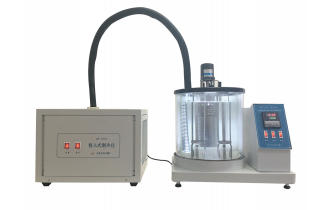
The DFYF-145B Petroleum Product Density Tester is designed and manufactured in strict accordance with GB/T 1884 and ASTM D1298 standards. The instrument features an intelligent digital temperature controller with a temperature range of 5~100°C and accuracy of ±0.1°C. The bath is equipped with a full stainless steel stirring device and spiral main and auxiliary heaters to ensure uniform and stable bath temperature. The cooling unit features an imported compressor (400W) — providing rapid cooling, low noise, and long service life, easily achieving low-temperature density determination down to 5°C. The bath uses a large-capacity circular transparent glass cylinder with high transparency and corrosion resistance; a ring light installed at the bottom of the bath provides uniform, soft illumination, greatly improving the operator's visual observation conditions. All components in contact with samples or bath liquids are made of stainless steel or corrosion-resistant glass, suitable for petroleum product testing environments.
Customer Value:
You no longer need to tolerate inaccurate temperature control, poor observation conditions, inability to test at low temperatures, or equipment corrosion in traditional density determination. The DFYF-145B provides a comprehensive density determination solution featuring wide-range high-precision temperature control (5~100°C / ±0.1°C), efficient refrigeration with imported compressor, transparent bath with ring light illumination, and full stainless steel corrosion-resistant construction — ensuring that density data for every batch of petroleum products is accurate and reliable, safeguarding trade fairness and quality control.
Parameter | Value | Why It Matters to You |
Applicable Standards | GB/T 1884, ASTM D1298 | Dual compliance ensures global acceptance — export-ready, results mutually recognised worldwide |
Power Supply | AC220V 50Hz (AC110V/60Hz available on request) | Standard industrial power, adaptable to voltage requirements of different countries and regions |
Total Input Power | 1000W | Rapid heating to test temperature, minimising waiting time |
Immersion Cooler Power | 400W (imported compressor) | Efficient cooling, rapid temperature reduction, low noise, long service life |
Temperature Control Range | 5 ~ 100°C | Covers wide-range density determination requirements from low temperature (5°C) to high temperature (100°C) |
Temperature Control Accuracy | ±0.1°C | High-precision temperature control ensures accurate and reliable density readings, meeting the strict temperature requirements of standard methods |
Bath Material | Large-capacity circular transparent glass cylinder | High transparency, corrosion-resistant, convenient for observing samples and hydrometers |
Illumination System | Ring light (installed at bath bottom) | Uniform, soft illumination, greatly improving visual observation conditions |
Stirring Device | Full stainless steel stirring device | Ensures uniform and stable bath temperature, oil-resistant and corrosion-resistant |
Heater | Spiral main and auxiliary heaters (stainless steel) | Uniform heating, corrosion-resistant, suitable for long-term frequent use |
Contact Materials | Stainless steel or corrosion-resistant glass | All components in contact with samples or bath liquids are corrosion-resistant, suitable for petroleum product testing environments |
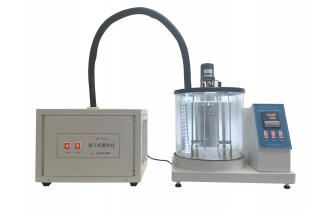
Wide Range, High-Precision Temperature Control – 5~100°C / ±0.1°C
Equipped with an intelligent digital temperature controller, the instrument offers a temperature range of 5~100°C with accuracy of ±0.1°C. A full stainless steel stirring device and spiral main and auxiliary heaters ensure uniform and stable bath temperature, meeting density determination requirements for various petroleum products at different temperatures. Whether for routine density determination at ambient temperature (20°C), high-temperature (e.g., 50°C, 80°C) testing of viscous oils, or low-temperature (5°C) testing of special products, all can be precisely achieved.
Transparent Large-Capacity Constant Temperature Bath – Clear Observation Without Obstruction
The bath uses a large-capacity circular transparent glass cylinder — highly transparent and corrosion-resistant. Compared to conventional metal baths or opaque materials, the glass bath allows operators to directly observe the floating condition and scale readings of the hydrometer in the sample. A ring light installed at the bottom of the bath provides uniform, soft illumination, greatly improving visual observation conditions and effectively enhancing density reading accuracy and repeatability — which is critical for the hydrometer method (GB/T 1884 / ASTM D1298) that relies on visual reading of hydrometer scales.
Efficient and Durable Refrigeration System – Imported Compressor, Easily Achieves 5°C Low-Temperature Testing
The cooling unit features an imported compressor with 400W power — rapid cooling, low noise, and long service life. Combined with the main temperature control system, it easily achieves low-temperature density determination down to 5°C and supports switching between multiple temperature points. For laboratories requiring density determination of petroleum products at low temperatures (such as cold-weather oil adaptability assessment, specific product standard requirements, etc.), this function is indispensable. One instrument meets both routine laboratory and R&D testing needs.
Corrosion-Resistant, Easy-Maintenance Structure
All components in contact with samples or bath liquids (stirring paddle, heater, bath cylinder, etc.) are made of stainless steel or corrosion-resistant glass — suitable for the corrosion commonly caused by oils, solvents, and chemicals in petroleum product testing environments. The modular design facilitates daily cleaning and maintenance, remaining clean and corrosion-free even after long-term use, significantly extending equipment service life.
Ring Light Illumination – More Accurate Readings
The core operation of the hydrometer method for density determination is visual reading of hydrometer scales. Lighting conditions directly affect reading accuracy — insufficient or uneven light distribution leads to reading deviations. The DFYF-145B features a ring light installed at the bottom of the bath, providing uniform, soft backlight illumination that makes hydrometer scales clearly visible, effectively reducing visual fatigue and reading errors, and improving density data repeatability and reproducibility.
Scenario 1: Petroleum Refinery – Crude Oil and Finished Product Density Testing
A major refinery in East China uses the DFYF-145B for density testing of incoming crude oil and outgoing finished products (gasoline, diesel, fuel oil). Following GB/T 1884 at 20°C, crude oil density is determined for volume-to-mass trade conversion. The imported compressor ensures the bath remains stably controlled at 20°C even in high summer temperatures; the ±0.1°C temperature control accuracy ensures that density data measured by different shifts on different days are highly consistent, effectively reducing trade settlement disputes. The transparent glass bath and ring light illumination enable operators to quickly and accurately read hydrometer scales, significantly increasing daily testing throughput.
Scenario 2: Third-Party Testing Laboratory – High-Volume Commissioned Testing
A national-level oil testing centre in North China receives large numbers of fuel oil, lubricating oil, and solvent oil samples for density testing each month. The DFYF-145B's 5~100°C wide-range temperature control enables flexible response to different product standard temperature requirements — light oils at 20°C, heavy fuel oils at 50°C or 80°C. The full stainless steel stirring device and corrosion-resistant construction maintain stable performance even after long-term continuous operation, with easy maintenance. The combination of transparent bath and ring light significantly reduces reading differences between different operators, and the data consistency of test reports has earned recognition from CNAS assessors.
Scenario 3: Fuel Oil Trader – Import/Export Commodity Inspection
A company engaged in fuel oil import/export uses the DFYF-145B for density inspection on every batch of imported and exported fuel oil. Strictly following the ASTM D1298 hydrometer method ensures test results are consistent with those from overseas clients and inspection bodies. The imported compressor operates stably in the year-round high-temperature environment of the port laboratory, ensuring precise temperature control across the full 5~100°C range. Density data are directly used for quantity settlement in international trade, providing a solid technical foundation for trade fairness.
Scenario 4: Lubricant Manufacturer – Formulation Development and Quality Control
A specialty lubricant manufacturer uses the DFYF-145B to evaluate the effect of different base oils and additive formulations on density during new product development. By determining sample density at various temperatures (20°C, 40°C, 100°C), the R&D team obtained complete density-temperature curve data, providing accurate data for formulation optimisation and customer technical documentation. The transparent bath allows R&D personnel to observe sample condition at test temperature at any time (uniformity, presence of bubbles, etc.), ensuring the validity of every data set.
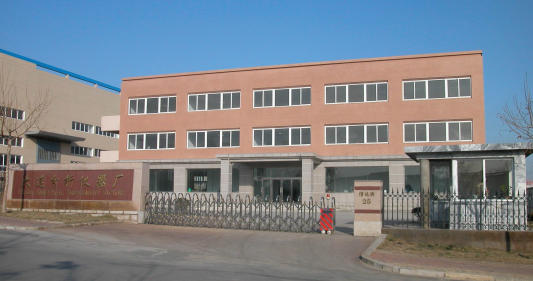
Category | Details |
Established | Since 1978 – over 45 years of experience in petroleum testing instruments |
Facility Size | 8,000+ m² modern production base in Dalian High-Tech Zone |
R&D Team | 15+ senior engineers specialising in oil analysis equipment |
Annual Capacity | 500+ units of various petroleum testing instruments |
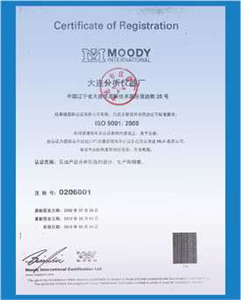
Certifications | ISO 9001:2015 certified; products meet ASTM, ISO, GB/T standards |
Export Markets | Southeast Asia, Middle East, Europe, South America, Africa |
Key Clients | Petroleum refineries, third-party testing centres, commodity inspection laboratories, university research labs |
Custom Services | OEM/ODM support; voltage customisation (AC110V/60Hz), temperature range adjustment, and other modifications available upon request |
We don't just sell instruments. We provide complete testing solutions with 48-hour technical support response and lifetime remote assistance.
Standard Compliance: Fully conforms to GB/T 1884 and ASTM D1298 standards
CE Marking: Available upon request (certificate number can be provided)
Calibration Certificate: Each unit comes with a factory calibration report traceable to national standards, verified using certified density reference liquids
Q1: What is the relationship between GB/T 1884 and ASTM D1298?
A: GB/T 1884 is the Chinese national standard "Petroleum and Liquid Petroleum Products – Determination of Density – Hydrometer Method", and ASTM D1298 is the ASTM International standard "Standard Test Method for Density, Relative Density, or API Gravity of Crude Petroleum and Liquid Petroleum Products by Hydrometer Method". The two are technically equivalent, both employing the glass hydrometer method for density determination of petroleum products. The DFYF-145B fully complies with both standards, making test results mutually recognised worldwide — export-ready.
Q2: Why is density so important in petroleum product trade?
A: In petroleum product custody transfer, quantity is typically measured by volume (e.g., barrels, litres), but transaction prices are settled by mass (e.g., tonnes). Density is the key parameter connecting volume and mass — volume can be converted to mass through density. Inaccurate density determination can result in measurement deviations for tens of thousands of tonnes of oil, causing enormous economic losses. Therefore, accurate and reliable density determination is the foundation of fair petroleum trade.
Q3: How important is ±0.1°C temperature control accuracy for density determination?
A: The density of petroleum products is highly temperature-sensitive — a 1°C temperature change typically causes a density change of 0.0005~0.0008 g/cm³. For oil trades of tens of thousands of tonnes, this seemingly minor difference can correspond to a mass deviation of tens of tonnes. The ±0.1°C temperature control accuracy ensures that density determination is conducted under strictly constant temperature conditions, with data that are truly reliable and meet the precision requirements of international trade.
Q4: Why is low-temperature (5°C) determination capability needed?
A: Certain petroleum product standards require density determination at low temperatures (e.g., fuel oils used in cold regions, specific grades of lubricating oils, etc.). Additionally, when studying the density-temperature characteristics of oils, complete data curves from low to high temperatures are required. The imported compressor refrigeration system enables the DFYF-145B to easily achieve 5°C low-temperature density determination, meeting more application scenarios with a single instrument.
Q5: What are the advantages of a transparent glass bath over opaque baths?
A: The core operation of the hydrometer method (GB/T 1884 / ASTM D1298) is visual reading of hydrometer scales in the sample. The transparent glass bath allows operators to directly and clearly observe the hydrometer's floating condition and scale readings without removing the sample, reducing the effect of temperature changes on readings. The ring light further improves observation conditions, making readings more accurate.
Q6: What are the advantages of an imported compressor over domestic compressors?
A: Imported compressors offer faster cooling, lower noise, and longer service life. In daily continuous laboratory operation environments, the stability and reliability of imported compressors are significantly superior to ordinary compressors, with lower failure rates and maintenance costs, ensuring long-term stable instrument operation.
Q7: What is your delivery time?
A: Standard delivery is 20–25 working days after order confirmation. For urgent needs, please contact us to check current stock.
Q8: What is your warranty policy?
A: 12 months from the date of shipment, excluding consumables (hydrometers, thermometers, etc.). Lifetime technical support is included.
Per GB/T 1884 / ASTM D1298, here is the typical procedure for petroleum product density determination using the DFYF-145B:
Step | Action | Details |
1 | Sample preparation | Pour the petroleum product sample into a clean, dry graduated cylinder |
2 | Temperature setting | Set the target test temperature (e.g., 20°C, 50°C, 80°C) via the intelligent digital temperature controller, range 5~100°C |
3 | Bath temperature stabilisation | The bath automatically heats/cools to the set temperature with ±0.1°C high-precision stability; stainless steel stirring device ensures uniform bath temperature |
4 | Place sample | Place the graduated cylinder containing the sample into the constant temperature bath to bring the sample to test temperature |
5 | Insert hydrometer | Gently insert a clean, dry glass hydrometer into the sample and allow it to float freely |
6 | Read scale | Under uniform illumination from the ring light, visually read the hydrometer scale (read the lower meniscus for transparent samples; read the upper meniscus with correction for opaque samples) |
7 | Record temperature | Record the sample temperature simultaneously with the hydrometer reading (should be close to the bath set temperature) |
8 | Result calculation | Calculate the density value at the standard temperature (typically 20°C) from the hydrometer reading and temperature correction |
Transparent bath + ring light ensure clear and accurate readings; imported compressor + intelligent temperature control ensure precise 5~100°C full-range constant temperature.

You Need | DFYF-145B Delivers |
Standard compliance | GB/T 1884, ASTM D1298 — recognised globally |
Temperature range | 5~100°C — wide coverage |
Temperature accuracy | ±0.1°C — ensures accurate and reliable density readings |
Refrigeration system | Imported compressor (400W) — rapid cooling, long service life |
Observation conditions | Transparent glass bath + ring light — clear and accurate readings |
Corrosion resistance | Full stainless steel stirring/heating components + corrosion-resistant glass bath |
Sample types | Crude oil, fuel oil, lubricating oils, solvent oils, and other petroleum products |
After-sales support | 12-month warranty + lifetime remote support |
Trust | Established 1978, ISO 9001 certified, voltage customisation available |
Dalian Analytical Instrument Factory
Carlos Zhang (Overseas Sales Manager)
�� Tel / WhatsApp / WeChat: +86 18740265556
�� Email: 54639288@qq.com
�� Website: https://www.analyzer-dfy.com
�� Address: 1-1, No.107 Guangxian Road, High-Tech Zone, Dalian, Liaoning, China (Zip code: 116023)
We don't write empty words. We provide data, facts, standards, and solutions – because that's what B2B buyers and Google truly value.