
Language
Search
Pain Point:
For hydraulic systems, turbine units, and lubrication equipment, air entrainment in oil is a hidden hazard that is often overlooked but extremely detrimental. Air in lubricating oils exists in three forms: dissolved air, suspended bubbles, and entrained air (foam) — among which entrained air poses the most direct threat to system operation. When oil contains excessive entrained air, the compressibility of the oil increases significantly, leading to sluggish hydraulic system response and reduced control precision; bubbles compressed in high-pressure zones and rapidly expanding in low-pressure zones cause cavitation, resulting in surface damage to pumps and valves; the localised high temperatures generated by bubble collapse accelerate oil oxidation, shortening oil service life. Furthermore, entrained air in oil generates noise and vibration, affecting equipment operational stability. How can you accurately evaluate the ability of oil to separate entrained air before it is put into service or during operation?
Our Solution:
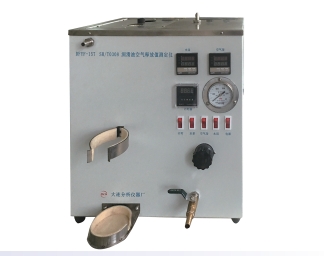
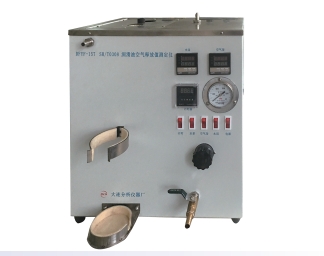
The DFYF-157 Lubricating Oil Air Release Value Tester is strictly designed and manufactured in accordance with SH/T 0308 Determination of Air Release Value of Lubricating Oils, specifically for determining the ability of lubricating oils (especially hydraulic oils, turbine oils, and gear oils) to separate entrained air. The instrument features independent dual-temperature control systems — water bath and air bath: water bath temperature range from ambient to 99.9°C with accuracy of ±0.1°C, ensuring constant oil sample temperature; air bath temperature range from ambient to 99.9°C with accuracy of ±5°C, preheating compressed air to a temperature close to the oil sample to eliminate temperature differential interference. The instrument is equipped with a precision air supply system (pressure adjustable) and a digital timer, ensuring accurate aeration and recording times. The test result — air release value, defined as the time (in minutes) required for the volume of entrained air in the oil sample to decrease to 0.2% — is a critical indicator for evaluating the anti-foaming performance and air separation capability of oils.
Customer Value:
You no longer need to worry about sluggish hydraulic response, cavitation damage, or premature oil oxidation. The DFYF-157 provides a comprehensive air release value determination solution featuring independent dual-temperature control (water bath ±0.1°C), reliable and safe air supply system, and precise digital timing — ensuring that the air separation capability of every batch of lubricating oil is verified and validated, safeguarding the stable operation of hydraulic and lubrication systems.
Parameter | Value | Why It Matters to You |
Applicable Standard | SH/T 0308 | Industry authority standard, applicable to turbine oils, hydraulic oils, and other petroleum products |
Power Supply | AC220V 50Hz | Standard industrial power |
Input Power | 1000W | Efficient heating, rapid temperature rise to test temperature |
Water Bath Temperature Control Range | Ambient ~ 99.9°C | Covers standard test temperatures (25°C, 50°C, 75°C) and custom requirements |
Water Bath Temperature Control Accuracy | ±0.1°C | High-precision temperature control ensures constant oil sample temperature and reliable data |
Air Bath Temperature Control Range | Ambient ~ 99.9°C | Preheats compressed air to a temperature close to the oil sample, minimising test errors |
Air Bath Temperature Control Accuracy | ±5°C | Meets the standard requirements for compressed air preheating temperature |
Output Method | Solid-state relay | Contactless, spark-free, long service life, high safety factor |
Timing Method | Digital timer (adjustable) | Easy setting and reading, ensures accurate aeration and recording times |
Air Supply System | Pressure gauge + regulating valve, pressure adjustable | Stable and controllable air pressure, reliable sealed piping |
Dedicated Standard, Professional Testing
The DFYF-157 is strictly designed and manufactured in accordance with SH/T 0308 Determination of Air Release Value of Lubricating Oils, specifically for determining the ability of lubricating oils to separate entrained air. The standard applies to petroleum products such as turbine oils and hydraulic oils. Test results carry industry authority and can serve as a basis for oil quality arbitration. The instrument is widely used in oil R&D, quality inspection, and in-service oil monitoring.
Dual-Temperature Control System for Realistic Operating Conditions
The instrument features independent dual-temperature control — a water bath that heats the oil sample to the set temperature and maintains it constant, and an air bath that preheats the compressed air before it is introduced into the oil sample to a temperature close to that of the oil sample. This design eliminates localised temperature differentials caused by cold air entering a hot oil sample, ensuring test conditions better reflect actual operating environments.
High-Precision Water Bath Temperature Control – ±0.1°C for Reliable Data
The water bath is controlled by an intelligent temperature controller with PID regulation, achieving temperature control accuracy of ±0.1°C. Air release value is highly temperature-sensitive — temperature deviations cause changes in oil viscosity and surface tension, directly affecting bubble release rates. The ±0.1°C accuracy ensures that testing is conducted under strictly constant temperature conditions, delivering truly reliable data.
Adjustable Digital Timer for Precise Timing
Equipped with an adjustable digital timer for easy setting and reading, ensuring accurate aeration and recording times. The standard method requires precise control of aeration duration (typically 7 minutes) and observation timing — the digital timer effectively eliminates human timing errors.
High-Quality Stainless Steel Water Bath – Durable and Robust
The water bath is constructed of stainless steel, offering corrosion resistance and easy cleaning, suitable for laboratory environments with prolonged oil and moisture exposure. The air bath is equipped with a stainless steel buffer bottle and heater, with a compact and tidy air circuit design.
Reliable and Safe Air Supply System
Equipped with a pressure gauge and regulating valve for stable and controllable air pressure. Piping connections are secure and leak-free, facilitating easy installation and maintenance. The solid-state relay provides contactless output — spark-free, long service life, and high safety factor, suitable for long-term continuous operation.
Scenario 1: Hydraulic Oil Manufacturer – Product Quality Control
A major hydraulic oil producer in East China uses the DFYF-157 for air release value testing on every batch of HM hydraulic oils. Following SH/T 0308 at 50°C, compressed air is introduced into the oil sample for 7 minutes, and the time required for the entrained air volume to decrease to 0.2% is recorded. The hydraulic oils consistently meet air release value requirements, effectively ensuring the responsiveness and operational stability of end-user hydraulic systems, with a significant reduction in customer complaints.
Scenario 2: Turbine Oil Supplier – Power Plant Oil Quality Assurance
A turbine oil supplier in North China, serving multiple power plants, uses the DFYF-157 for air release value testing on every batch. Turbine oils in steam turbine lubrication systems operate under high-speed circulation — if air release performance is inadequate, entrained air can cause unstable oil film, elevated bearing temperatures, and sluggish control system response. The dual-temperature control system ensures the oil sample is precisely maintained at 75°C (the common test temperature for turbine oils), while the air bath preheats the compressed air to eliminate temperature differential interference. Test data provide a solid foundation for reliable product performance.
Scenario 3: Third-Party Testing Laboratory – Commissioned Testing Services
A national-level oil testing centre in South China receives large numbers of hydraulic oil, gear oil, and turbine oil samples for air release value testing each month. The DFYF-157's independent dual-temperature control design and intelligent temperature controller enable the laboratory to efficiently conduct tests at various temperatures (25°C, 50°C, 75°C). The stainless steel water bath remains clean and corrosion-free even after frequent testing, and the digital timer ensures consistent timing across different operators. Test reports have earned high recognition from CMA assessors.
Scenario 4: Construction Machinery Oil Maintenance – In-Service Oil Condition Monitoring
A large construction machinery rental company uses the DFYF-157 for regular air release value monitoring of in-service hydraulic oil in hydraulic excavators. As oil service time increases, additive depletion and oil degradation cause air release performance to deteriorate. By regularly monitoring air release value trends, the maintenance team can determine whether oil needs to be replaced or supplemented with anti-foam additives in a timely manner, effectively preventing sluggish response, cavitation damage, and other failures caused by excessive air entrainment in hydraulic systems.
Category | Details |
Established | Since 1978 – over 45 years of experience in petroleum testing instruments |
Facility Size | 8,000+ m² modern production base in Dalian High-Tech Zone |
R&D Team | 15+ senior engineers specialising in oil analysis equipment |
Annual Capacity | 500+ units of various petroleum testing instruments |
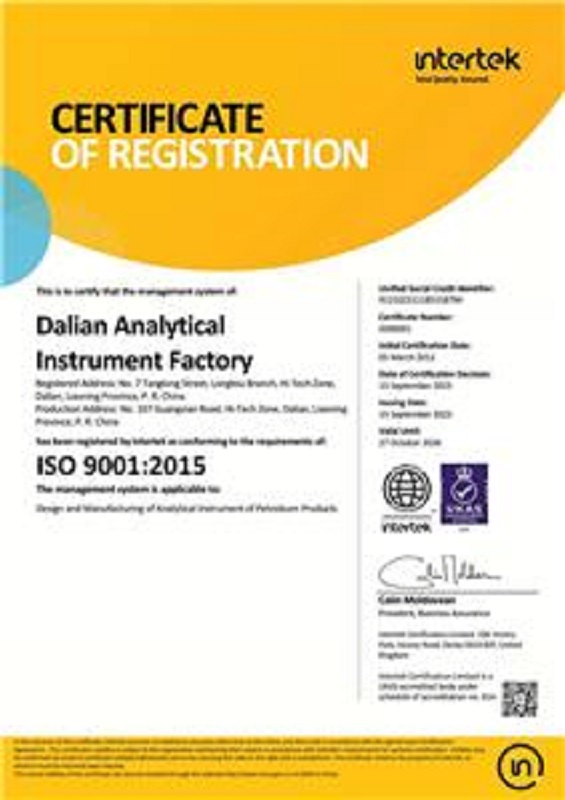
Certifications | ISO 9001:2015 certified; products meet ASTM, ISO, GB/T, SH/T standards |
Export Markets | Southeast Asia, Middle East, Europe, South America, Africa |
Key Clients | Lubricant manufacturers, third-party testing centres, power industry, construction machinery industry |
Custom Services | OEM/ODM support available |
We don't just sell instruments. We provide complete testing solutions with 48-hour technical support response and lifetime remote assistance.
Standard Compliance: Fully conforms to SH/T 0308 standard
CE Marking: Available upon request (certificate number can be provided)
Calibration Certificate: Each unit comes with a factory calibration report traceable to national standards
Q1: What oil types does SH/T 0308 apply to?
A: SH/T 0308 Determination of Air Release Value of Lubricating Oils applies to petroleum products such as turbine oils and hydraulic oils. The standard is also applicable to gear oils, compressor oils, and other lubricants that operate in circulating systems and are prone to air entrainment. The standard specifies the method for determining the ability of lubricating oils to separate entrained air, with the test result expressed as the air release value (in minutes).
Q2: What is the air release value, and why is it important?
A: The air release value is the time (in minutes) required for the volume of entrained air in an oil sample to decrease to 0.2% under standard test conditions. A smaller air release value indicates stronger air separation capability. For hydraulic systems and turbine lubrication systems, entrained air causes sluggish response, cavitation damage, and accelerated oil oxidation — the air release value is a critical indicator for evaluating whether an oil can operate reliably in these systems.
Q3: What is the difference between air release value and foam characteristics?
A: The two evaluate different forms of air in oil. Foam characteristics (GB/T 12579 / ASTM D892) evaluate the tendency of foaming and foam collapse rate on the oil surface, reflecting the surface air entrainment capability. Air release value (SH/T 0308) evaluates the rate at which dispersed entrained air (micro-bubbles) is released from within the oil, reflecting the internal air separation capability. Both are important indicators of anti-foaming performance, but they address different aspects using different test methods.
Q4: Why is dual-temperature control (water bath + air bath) needed?
A: During testing, compressed air is introduced into the heated oil sample. If the compressed air temperature is significantly lower than the oil sample temperature, cold air entering the hot oil creates localised cooling, leading to temperature non-uniformity and viscosity changes that affect bubble release rates. The air bath preheats the compressed air to a temperature close to the oil sample, eliminating temperature differential interference and ensuring test results more accurately reflect air release performance under actual operating conditions.
Q5: How important is ±0.1°C water bath temperature control accuracy?
A: Air release value is highly temperature-sensitive — temperature changes affect oil viscosity and surface tension, altering bubble release rates. The ±0.1°C accuracy ensures testing is conducted under strictly constant temperature conditions, making data comparable across different batches and laboratories. This is also a strict requirement of the SH/T 0308 standard for water bath temperature control.
Q6: What are the standard test temperatures for air release value testing?
A: The SH/T 0308 standard specifies test temperatures of 25°C, 50°C, or 75°C depending on the oil type. For example, hydraulic oils are typically tested at 50°C, while turbine oils are tested at 75°C. The DFYF-157's water bath temperature range covers ambient to 99.9°C, flexibly meeting the testing requirements for different oils and standard temperatures.
Q7: What is your delivery time?
A: Standard delivery is 20–25 working days after order confirmation. For urgent needs, please contact us to check current stock.
Q8: What is your warranty policy?
A: 12 months from the date of shipment, excluding consumables. Lifetime technical support is included.
Per SH/T 0308, here is the typical procedure for lubricating oil air release value testing using the DFYF-157:
Step | Action | Details |
1 | Sample preparation | Pour approximately 200mL of oil sample into the dedicated jacketed test tube |
2 | Temperature setting | Set the water bath temperature (25°C, 50°C, or 75°C) via the intelligent temperature controller |
3 | Dual-bath temperature stabilisation | Water bath heats the oil sample to the set temperature (±0.1°C); air bath preheats compressed air to a temperature close to the sample (±5°C) |
4 | Introduce air | Introduce compressed air at 19.6 kPa into the oil sample for 7 minutes to saturate the sample with entrained air |
5 | Stop aeration | Stop the air supply and immediately start the digital timer |
6 | Observation and recording | Record the time (in minutes) required for the entrained air volume to decrease to 0.2% |
7 | Result reporting | This time is the air release value — a smaller value indicates stronger air separation capability |
Independent dual-temperature control (water bath ±0.1°C / air bath ±5°C), precise digital timing, and stable adjustable air pressure — the DFYF-157 provides a complete air release value determination solution from sample to data.
You Need | DFYF-157 Delivers |
Standard compliance | SH/T 0308 — industry authority standard for lubricating oil air release value testing |
Water bath temperature control | Ambient~99.9°C / ±0.1°C — high-precision constant temperature |
Air bath temperature control | Ambient~99.9°C / ±5°C — preheats compressed air to eliminate temperature differentials |
Air supply system | Pressure gauge + regulating valve — stable and adjustable pressure |
Timing method | Digital timer (adjustable) — precise timing |
Output method | Solid-state relay — contactless, long service life, safe and reliable |
After-sales support | 12-month warranty + lifetime remote support |
Trust | Established 1978, ISO 9001 certified |

Dalian Analytical Instrument Factory
Carlos Zhang (Overseas Sales Manager)
�� Tel / WhatsApp / WeChat: +86 18740265556
�� Email: 54639288@qq.com
�� Website: https://www.analyzer-dfy.com
�� Address: 1-1, No.107 Guangxian Road, High-Tech Zone, Dalian, Liaoning, China (Zip code: 116023)
We don't write empty words. We provide data, facts, standards, and solutions – because that's what B2B buyers and Google truly value.