
Language
Search


Pain Point:
For quality control in crude oil, lubricating oils, fuel oils, transformer oils, and other petroleum products, acid number is one of the core indicators for evaluating oil quality and degree of degradation. A high acid number indicates that the oil has undergone oxidative deterioration, which may lead to equipment corrosion, reduced insulating performance, increased sludge formation, and a range of other problems. However, traditional acid number determination methods (such as the colour indicator method) have significant limitations: subjective judgement of colour change by the human eye introduces errors; the endpoint is nearly impossible to discern in dark-coloured oils (such as crude oil and used lubricating oils); insufficient measurement range — conventional methods struggle to accurately determine low acid number samples (such as transformer oils and light oils); complicated operation and significant human error — manual titration and reading place high demands on operator experience. How can you accurately and reliably determine the acid number of various petroleum products in the laboratory?
Our Solution:
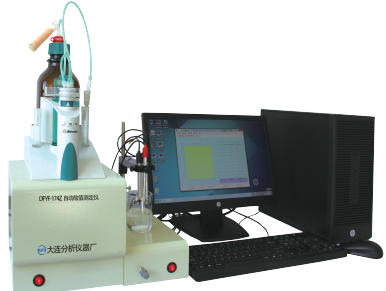
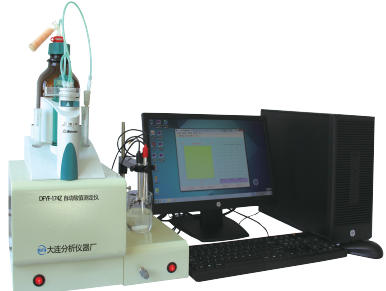
The DFYF-175Z Automatic Acid Number Tester employs the potentiometric titration method, specifically designed for automatic acid number determination in crude oil, lubricating oils, fuel oils, transformer oils, and other petroleum products. The instrument complies with multiple national and internationally recognised standards including GB/T 18609, GB/T 7304, and GB/T 264. The potential measurement range is -2000.0 mV to +2000.0 mV, with an electronic unit basic error of only ±0.1% F·S ±0.1 mV, and an input impedance of ≥1×10¹² Ω, ensuring stable acquisition of weak signals. It employs a 10 mL high-precision burette with a minimum titration volume of 0.001 mL and burette accuracy of ±0.1% F·S. The instrument is equipped with an imported anti-diffusion titration tip to prevent titrant backflow and diffusion. Based on a Windows operating platform, the instrument features fully automatic titration functions — automatic tubing cleaning, automatic fixed-volume liquid addition, and automatic endpoint determination, with support for a resume titration function (allowing test completion after unexpected interruption).
Customer Value:
You no longer need to tolerate subjective colour judgement errors, inability to measure low acid numbers, or difficulty in testing dark-coloured samples in traditional acid number determination. The DFYF-175Z provides a comprehensive solution featuring high-precision potential detection (±0.1 mV), ultra-low detection limit (≥0.001 mgKOH/g), imported anti-diffusion titration tip, fully automatic intelligent titration, and Windows platform operation — making acid number determination more accurate, more reliable, and more efficient.
Parameter | Value | Why It Matters to You |
Applicable Standards | GB/T 18609, GB/T 7304, GB/T 264 | Multi-standard compliance ensures authoritative and traceable results |
Power Supply | AC220V 50Hz | Standard industrial power |
Measurement Range | ≥0.001 mgKOH/g | Ultra-low detection limit, 10 times better than conventional 0.01 mgKOH/g, particularly suitable for low acid number samples such as transformer oils |
Potential Measurement Range | -2000.0 ~ +2000.0 mV | Wide potential range, adaptable to various titration systems |
Electronic Unit Basic Error | ±0.1% F·S ±0.1 mV | High-precision potential detection, more accurate endpoint capture and sharper endpoint judgement |
Input Impedance | ≥1×10¹² Ω | Ultra-high impedance ensures stable acquisition of weak signals and high data reliability |
Burette Volume | 10 mL | Standard burette specification |
Minimum Titration Volume (Minimum Increment) | 0.001 mL | Finer micro-titration, superior to conventional 0.01~0.02 mL, significantly improved titration accuracy |
Burette Accuracy | ±0.1% F·S | Ensures titration accuracy from the source |
Titration Tip | Imported anti-diffusion titration tip | Prevents titrant backflow and diffusion, enabling sharper endpoint judgement |
Precision | Meets or exceeds GB/T 18609 requirements | Reliable data meeting the strict precision requirements of standard methods |
Operating Platform | Windows system | Human-machine dialogue with step-by-step guidance — no complex training required |
Ambient Temperature | 0~35°C | Suitable for most laboratory environments |
Automation Functions | Automatic tubing cleaning, automatic fixed-volume liquid addition, automatic titration, automatic endpoint determination | Fully automatic operation reduces human error; resume titration function provides high experimental fault tolerance |
Broad Standard Compliance – Authoritative and Traceable Data
The instrument fully complies with GB/T 18609 "Determination of Acid Number of Crude Oil by Potentiometric Titration", GB/T 7304 "Determination of Acid Number of Petroleum Products and Lubricants (Potentiometric Titration Method)", and GB/T 264 "Determination of Acid Number of Petroleum Products" — multiple national and internationally recognised standards. Whether you are testing crude oil, lubricating oils, fuel oils, or transformer oils, the data are authoritative and traceable.
Ultra-Low Detection Limit – ≥0.001 mgKOH/g, 10 Times Better Than Conventional Instruments
Conventional acid number titrators typically have a measurement range starting from 0.01 mgKOH/g, while the DFYF-175Z achieves a range of ≥0.001 mgKOH/g — a full order of magnitude lower than conventional instruments. This makes the DFYF-175Z exceptionally suitable for testing low acid number samples such as transformer oils, light oils, and turbine oils, meeting the high-standard testing requirements of export-grade oils.
High-Precision Potential Detection System – ±0.1 mV for Accurate Endpoint Capture
The potential measurement range is -2000.0 mV to +2000.0 mV, with an electronic unit basic error of only ±0.1% F·S ±0.1 mV. Compared to conventional acid number titrators with errors of ±1 mV or higher, the DFYF-175Z's accuracy is improved by a factor of ten. The input impedance of ≥1×10¹² Ω ensures stable acquisition of weak signals, particularly suitable for samples with pronounced titration endpoints, enabling sharper and more accurate endpoint judgement.
Precise and Reliable Titration System – 0.001 mL Minimum Titration Volume with Imported Anti-Diffusion Titration Tip
The instrument employs a 10 mL high-precision burette with a minimum titration volume of 0.001 mL — superior to conventional instruments with 0.01~0.02 mL — enabling finer micro-titration. Burette accuracy of ±0.1% F·S ensures titration accuracy from the source. The imported anti-diffusion titration tip effectively prevents titrant backflow and diffusion, enabling sharper endpoint judgement and more reliable titration results.
Intelligent Automatic Titration Functions – Fully Automatic Operation, Reduced Human Error
The instrument offers comprehensive automatic titration functions: automatic tubing cleaning to prevent cross-contamination; automatic fixed-volume liquid addition without manual operation; and a resume titration function — allowing test completion after unexpected interruption, providing high experimental fault tolerance. The entire titration process is fully automatic, minimising human error.
Windows Operating Platform – User-Friendly Interface with Convenient Data Management
Developed on a Windows system, the interface is clear and intuitive. The human-machine dialogue approach with step-by-step guidance requires no complex training. Test data and final analysis reports can be printed with one click for easy archiving. Supports data integration with LIMS systems to meet the information management requirements of modern laboratories.
Scenario 1: Transformer Oil Manufacturer – Precise Low Acid Number Detection
A major transformer oil producer in East China uses the DFYF-175Z for acid number testing on every batch. Acid number is a critical indicator of transformer oil's insulating performance — excessive acid number leads to reduced insulation and potential electrical failures. The transformer oil acid number typically falls within the range of 0.01~0.03 mgKOH/g, making it difficult to accurately quantify with conventional instruments having a 0.01 mgKOH/g detection limit. The DFYF-175Z's ≥0.001 mgKOH/g detection limit enables precise determination of minute acid number differences in every batch, ensuring consistent and reliable insulating performance. The high input impedance (≥1×10¹² Ω) ensures stable signal acquisition in low-conductivity samples.
Scenario 2: Crude Oil Trader – Import/Export Commodity Inspection
A company engaged in crude oil import/export uses the DFYF-175Z for acid number testing on every batch of imported and exported crude oil. Following GB/T 18609, potentiometric titration precisely determines the total acid number of crude oil. The Windows platform with step-by-step guidance enables different operators to become proficient quickly; the one-click print function facilitates the issuance of inspection reports. Potentiometric titration eliminates the endpoint identification issue encountered with the colour indicator method in dark-coloured crude oils, and test results are highly consistent with those from overseas clients and inspection bodies.
Scenario 3: Power System – Condition Monitoring of Transformer Oil/Turbine Oil
A large power plant in North China uses the DFYF-175Z for regular acid number tracking of in-service transformer oils and turbine oils. Acid number is an important indicator of oil degradation — by regularly monitoring acid number trends, maintenance personnel can detect oil deterioration early, predict potential equipment failures, and develop scientific oil change schedules. The imported anti-diffusion titration tip ensures titration accuracy stability over long-term use, guaranteeing comparability of tracking data.
Scenario 4: Research Institutions – Lubricating Oil Oxidation Stability Research
A petrochemical research institute uses the DFYF-175Z to track acid number changes in different formulated oils during oxidation tests for lubricating oil oxidation stability research. The GB/T 7304 standard potentiometric titration method provides a reliable data foundation. The automatic titration and endpoint determination functions enable researchers to efficiently complete large numbers of sample determinations, shortening the R&D cycle.
Category | Details |
Established | Since 1978 – over 45 years of experience in petroleum testing instruments |
Facility Size | 8,000+ m² modern production base in Dalian High-Tech Zone |
R&D Team | 15+ senior engineers specialising in oil analysis equipment |
Annual Capacity | 500+ units of various petroleum testing instruments |
Certifications | ISO 9001:2015 certified; products meet ASTM, ISO, GB/T standards |
Export Markets | Southeast Asia, Middle East, Russia, Europe, South America, Africa |
Key Clients | National petrochemical labs, power systems, third-party testing centres, university research labs, oil refineries |
Custom Services | OEM/ODM support; RS232/485 communication interfaces, LIMS integration, multi-language interfaces (English/Russian etc.) available upon request |
We don't just sell instruments. We provide complete testing solutions with 48-hour technical support response and lifetime remote assistance.
Professional Manufacturing Background: Dalian Analytical Instrument Factory has decades of experience in petroleum analysis instrument R&D, with products covering major petrochemical, power, defence, and third-party laboratories across China, and exported to Southeast Asia, the Middle East, Russia, and other markets. Every instrument undergoes potential calibration and titration verification before delivery to ensure accurate and reliable data.

Standard Compliance: Fully conforms to GB/T 18609, GB/T 7304, and GB/T 264 standards
CE Marking: Available upon request (certificate number can be provided)
Calibration Certificate: Each unit undergoes potential calibration and titration verification before delivery, accompanied by a calibration report traceable to national standards
Q1: What are the advantages of potentiometric titration over the colour indicator method?
A: The colour indicator method relies on human visual judgement of colour change, introducing subjective errors; the colour change is difficult to discern in dark-coloured oils (such as crude oil and used lubricating oils); different operator experience leads to varied results. Potentiometric titration uses electrodes to monitor potential changes and automatically determine the endpoint, unaffected by sample colour and operator subjectivity. Results are objective, accurate, and repeatable.
Q2: What types of samples do GB/T 18609, GB/T 7304, and GB/T 264 apply to respectively?
A: GB/T 18609 "Determination of Acid Number of Crude Oil by Potentiometric Titration" — applies to crude oil; GB/T 7304 "Determination of Acid Number of Petroleum Products and Lubricants (Potentiometric Titration Method)" — applies to petroleum products and lubricants (including lubricating oils, fuel oils, additives, etc.); GB/T 264 "Determination of Acid Number of Petroleum Products" — applies to petroleum products (colour indicator method, but the DFYF-175Z also accommodates its sample preparation requirements). The DFYF-175Z simultaneously complies with all three standards, meeting the testing requirements of different sample types.
Q3: What is the practical significance of the ≥0.001 mgKOH/g detection limit?
A: Conventional acid number titrators typically have a detection limit of 0.01 mgKOH/g. The acid number of high-end oils such as transformer oils and turbine oils typically falls within the range of 0.01~0.03 mgKOH/g — instruments with a 0.01 mgKOH/g detection limit can only indicate "present" or "absent" but cannot precisely quantify. The DFYF-175Z's 0.001 mgKOH/g detection limit enables precise determination of minute differences in every batch, particularly suitable for the high-standard testing requirements of export-grade oils.
Q4: Why is an input impedance of ≥1×10¹² Ω important?
A: In potentiometric titration, the signal generated by the electrode is a weak voltage signal. Higher input impedance results in less signal attenuation during transmission, yielding more authentic data. ≥1×10¹² Ω input impedance is a hallmark parameter of high-end potentiometric titrators, ensuring stable acquisition of weak signals in low-conductivity samples (such as transformer oils).
Q5: What does the imported anti-diffusion titration tip do?
A: With conventional titration tips, titrant tends to flow back or diffuse from the tip after titration, causing titration volume errors. The imported anti-diffusion titration tip features a special structural design that effectively prevents backflow and diffusion, ensuring that every drop of titrant precisely reaches the sample, enabling sharper endpoint judgement and more reliable results.
Q6: What is the practical use of the resume titration function?
A: During long-duration automatic titration processes, unexpected interruptions (such as power fluctuations, system freezes, etc.) may occur. Instruments with the resume titration function can continue the test from the point of interruption after the issue is resolved, eliminating the need to resample and restart — saving time and samples, particularly suitable for continuous testing of batch samples.
Q7: What is your delivery time?
A: Standard delivery is 20–25 working days after order confirmation. For urgent needs, please contact us to check current stock.
Q8: What is your warranty policy?
A: 12 months from the date of shipment, excluding consumables (electrodes, burettes, etc.). Lifetime technical support is included.

Per GB/T 18609 / GB/T 7304 / GB/T 264, here is the typical procedure for acid number determination using the DFYF-175Z:
Step | Action | Details |
1 | Sample preparation | Accurately weigh an appropriate amount of sample into the titration cup; add solvent (toluene/isopropanol/water mixed solvent) |
2 | Parameter setting | Set titration parameters (titrant concentration, endpoint potential, maximum titration volume, etc.) via the Windows interface |
3 | Start titration | Click "Start" — the instrument automatically initiates the titration program |
4 | Automatic cleaning | The instrument automatically cleans the titration tubing to prevent cross-contamination |
5 | Automatic fixed-volume liquid addition | The instrument automatically adds liquid to the set volume |
6 | Potentiometric titration | The burette adds titrant drop by drop with 0.001 mL precision; the electrode monitors potential changes in real time |
7 | Endpoint determination | The system automatically identifies the potential inflection point (equivalence point) and determines the titration endpoint |
8 | Result calculation | The system automatically calculates the acid number (mgKOH/g) from titrant consumption and sample mass |
9 | Data storage and printing | Results are automatically saved; complete analysis reports can be printed with one click |
High-precision potential detection, imported anti-diffusion titration tip, Windows intelligent operation platform — the DFYF-175Z provides a fully automatic acid number determination solution from sample to report.
You Need | DFYF-175Z Delivers |
Standard compliance | GB/T 18609, GB/T 7304, GB/T 264 — multi-standard compliance |
Detection limit | ≥0.001 mgKOH/g — 10 times better than conventional instruments |
Potential measurement accuracy | ±0.1 mV — more accurate endpoint capture |
Input impedance | ≥1×10¹² Ω — stable acquisition of weak signals |
Minimum titration volume | 0.001 mL — finer micro-titration |
Titration tip | Imported anti-diffusion — prevents backflow and diffusion |
Operating platform | Windows system — human-machine dialogue with step-by-step guidance |
Automation functions | Automatic cleaning, liquid addition, endpoint determination, resume titration |
After-sales support | 12-month warranty + lifetime remote support |
Trust | Established 1978, ISO 9001 certified, decades of petroleum analysis instrument manufacturing experience |

Dalian Analytical Instrument Factory
Carlos Zhang (Overseas Sales Manager)
�� Tel / WhatsApp / WeChat: +86 18740265556
�� Email: 54639288@qq.com
�� Website: https://www.analyzer-dfy.com
�� Address: 1-1, No.107 Guangxian Road, High-Tech Zone, Dalian, Liaoning, China (Zip code: 116023)
We don't write empty words. We provide data, facts, standards, and solutions – because that's what B2B buyers and Google truly value.