
Language
Search
Pain Point:
For lubricating oil and grease manufacturers, as well as tribology R&D institutions, anti-wear performance and extreme pressure load-carrying capacity are among the most critical indicators of lubricant quality. In real-world applications such as gear drives, bearing operations, and engine lubrication, lubricants must maintain effective oil film strength under extremely high point-contact pressures. Once the oil film breaks down, direct metal-to-metal contact occurs, leading to severe wear, seizure, and even welding — resulting in equipment failure and substantial economic losses. However, traditional anti-wear testing presents numerous challenges: lack of unified testing standards — different products require different test methods, making it difficult for a single instrument to cover all requirements; insufficient loading accuracy — manual or hydraulic loading systems often exhibit force fluctuations that compromise data repeatability; limited speed range — inability to simulate diverse operating conditions from low-speed heavy-load to high-speed light-load; inadequate temperature control — inability to study the effect of temperature on lubricant performance; wear scar measurement relying on operator experience — human reading errors and low efficiency. How can you accurately, efficiently, and comprehensively evaluate the anti-wear performance and extreme pressure load-carrying capacity of lubricants in the laboratory?
Our Solution:
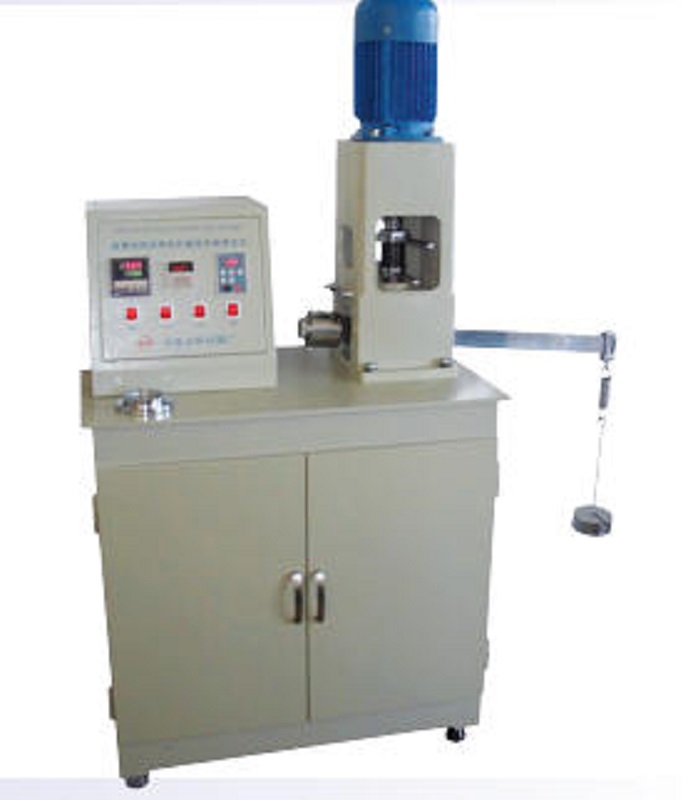
The DFYF-907 Lubricating Oil & Grease Anti-Wear Tester (Four-Ball Method) is strictly designed and manufactured in accordance with multiple standards including GB/T 3142 Determination of Load-Carrying Capacity of Lubricants, SH/T 0189 Determination of Anti-Wear Performance of Lubricating Oils, SH/T 0202 Determination of Extreme Pressure Performance of Greases, and SH/T 0204 Determination of Anti-Wear Performance of Greases. The instrument employs the classic four-ball friction pair principle — three standard steel balls are fixed in the oil cup, while a fourth ball rotates under axial load at a specified speed, creating point-contact friction with the three lower balls. The spindle speed is continuously adjustable from 1000 to 2800 r/min with an accuracy of ±40 r/min. The lever-type loading system provides a test force range of 60N to 8kN with an accuracy of ±1%. Intelligent temperature control is available from ambient to 200°C. A dedicated high-precision microscope enables rapid wear scar diameter measurement. The timer range is 1 second to 99 hours 99 minutes.
Customer Value:
You no longer need to compromise with traditional anti-wear testing equipment limited by inconsistent standards, inaccurate loading, restricted speed range, or lack of temperature control. The DFYF-907 provides a comprehensive anti-wear testing solution featuring multi-standard compatibility, wide adjustable speed range (1000~2800 r/min), high-precision lever loading (±1%), intelligent temperature control (ambient~200°C), and convenient wear scar measurement — accurately assessing lubricant load-carrying capacity and empowering quality upgrades.
Parameter | Value | Why It Matters to You |
Applicable Standards | GB/T 3142, SH/T 0189, SH/T 0202, SH/T 0204 | Multi-standard coverage in one instrument — suitable for both oils and greases, authoritative and traceable results |
Power Supply | AC380V 50Hz | Industrial standard power supply |
Power Consumption | 1.5 kW | Efficient operation with reasonable energy consumption |
Spindle Speed | 1000 ~ 2800 r/min, continuously adjustable | Wide adjustable speed range covers diverse conditions from low-speed heavy-load to high-speed light-load |
Speed Accuracy | ±40 r/min | Ensures stable test conditions and good data repeatability |
Temperature Control Range | Ambient ~ 200°C | Enables study of temperature effects on lubricant performance, providing data support for high-temperature applications |
Loading Method | Lever-type, manual | Intuitive operation, accurate and reliable force application, excellent repeatability |
Test Force Range | 60N ~ 8kN | Covers full-range requirements from light-load anti-wear testing to heavy-load extreme pressure testing |
Test Force Accuracy | ±1% | High-precision loading ensures reliable and accurate test force values |
Steel Ball Diameter | 12.7 mm (standard four-ball) | Complies with standard method requirements |
Wear Scar Measurement | Dedicated high-precision microscope | Rapid wear scar diameter reading, reducing human error and improving test efficiency |
Timer Range | 1 second ~ 99 hours 99 minutes | Adapts to full-range requirements from short-term extreme pressure testing to long-term wear testing |
Multi-Standard, Multi-Function – One Instrument Covers All Requirements
The DFYF-907 is strictly designed and manufactured in accordance with GB/T 3142 Determination of Load-Carrying Capacity of Lubricants, SH/T 0189 Determination of Anti-Wear Performance of Lubricating Oils, SH/T 0202 Determination of Extreme Pressure Performance of Greases, and SH/T 0204 Determination of Anti-Wear Performance of Greases. One instrument can simultaneously meet the anti-wear performance, extreme pressure performance, and load-carrying capacity testing requirements for both lubricating oils and greases. It can determine maximum non-seizure load (PB), welding load (PD), combined wear value (ZMZ), and long-term wear data. In practical applications, different evaluation indicators can be selected according to the specific application of the lubricant.
Wide Adjustable Speed Range – Simulates Real Operating Conditions
The spindle speed is continuously adjustable from 1000 to 2800 r/min with an accuracy of ±40 r/min. From low-speed heavy-load to high-speed light-load, it covers friction and wear test requirements under diverse operating conditions. For R&D laboratories, this enables flexible simulation of actual lubricant working conditions under different equipment and operating scenarios, providing test data with greater engineering relevance.
Lever-Type Manual Loading – Accurate and Reliable Force Application
The lever-type loading system provides an axial test force range of 60N to 8kN with test force accuracy of ±1%. Lever loading offers intuitive operation, accurate force transmission, and excellent repeatability. Compared to hydraulic loading systems, lever-type loading requires no complex hydraulic circuits and maintenance — offering low failure rates and suitability for long-term stable laboratory operation.
Intelligent Temperature Control – Study Temperature Characteristics
Temperature is adjustable from ambient to 200°C using a rod-type heater. Temperature is a critical factor affecting lubricant performance — at elevated temperatures, oil film strength decreases and wear intensifies. The DFYF-907's intelligent temperature control system enables precise determination of temperature effects on lubricant performance, providing essential data support for high-temperature applications such as engine oils and high-temperature bearing greases.
Convenient Wear Scar Measurement – Clear Results at a Glance
Equipped with a dedicated high-precision microscope for rapid reading of wear scar diameter on steel ball surfaces. Traditional methods rely on operator experience and judgment, introducing subjective errors. The dedicated microscope standardises and accelerates wear scar measurement, effectively reducing human error and improving test efficiency and data reliability.
Flexible Timing Settings – Adapts to Diverse Test Cycles
The timer range is 1 second to 99 hours 99 minutes — from short-term extreme pressure testing (seconds) to long-term wear testing (hundreds of hours), all can be easily accommodated. Whether for rapid formulation screening or durability validation, the DFYF-907 meets all requirements.
Automatic Overload Protection – Safe and Reliable Operation
The instrument features a built-in overload protection device that automatically stops the motor when the four balls seize. This safety design effectively protects both the equipment and operators, preventing equipment damage and safety incidents caused by unexpected welding events.
Scenario 1: Lubricating Oil Manufacturer – Anti-Wear Hydraulic Oil Development and Quality Control
A major lubricant producer in East China uses the DFYF-907 for product development and quality control of anti-wear hydraulic oils (HM hydraulic oils). Following SH/T 0189, the wear scar diameter (D value) is determined at a load of 147N and a speed of 1200 r/min to evaluate the anti-wear performance of different additive formulations. By comparing wear scar diameter data from various formulations, the R&D team precisely identified the additive combination with optimal anti-wear performance, enabling the product to pass OEM certifications such as Denison and Parker. The quality control department uses the DFYF-907 for batch sampling inspection to ensure consistency of anti-wear performance across batches.
Scenario 2: Grease Manufacturer – Extreme Pressure Performance Evaluation
A grease manufacturer in North China uses the DFYF-907 following SH/T 0202 to determine the extreme pressure performance of greases. By incrementally increasing the load, the maximum non-seizure load (PB) and welding load (PD) are determined to evaluate the load-carrying capacity of greases under heavy-load conditions. Test data are directly used for product technical data sheet preparation and customer technical communications, providing strong technical support for the sales team.
Scenario 3: Third-Party Testing Laboratory – High-Volume Commissioned Testing
A national-level tribology testing centre in South China receives large numbers of lubricating oil and grease samples for anti-wear testing each month. Clients include lubricant manufacturers, bearing manufacturers, gearbox manufacturers, and others. The DFYF-907's multi-standard compatibility enables flexible switching between test methods according to client requirements — lubricating oil samples tested per SH/T 0189, grease samples tested per SH/T 0204 or SH/T 0202. The dedicated high-precision microscope enables rapid and accurate wear scar measurement, significantly increasing daily throughput. The authority of test reports has earned high recognition from CMA and CNAS assessors.
Scenario 4: Research Institutions – Fundamental Tribology Research
A tribology laboratory at a university's mechanical engineering department uses the DFYF-907 for fundamental research on the lubrication performance of novel nano-additives. By systematically testing under different speeds (1000~2800 r/min), temperatures (ambient~200°C), and load conditions, researchers obtained anti-wear performance data for new additives under various operating conditions, providing a solid experimental foundation for lubricant formulation design and tribological mechanism research.
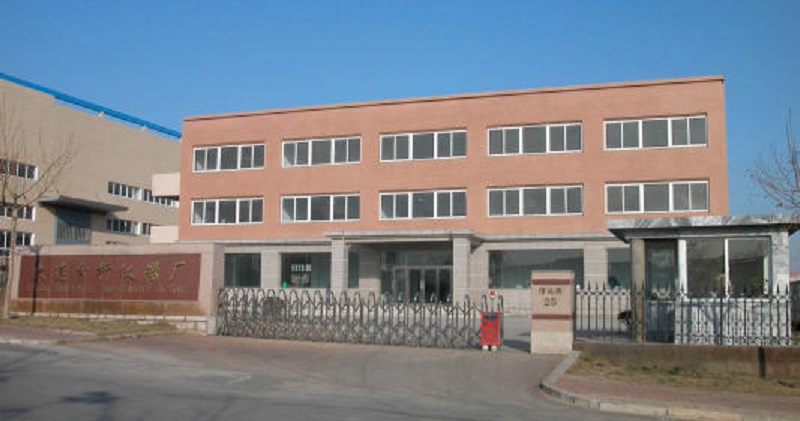
Category | Details |
Established | Since 1978 – over 45 years of experience in petroleum testing instruments |
Facility Size | 8,000+ m² modern production base in Dalian High-Tech Zone |
R&D Team | 15+ senior engineers specialising in oil analysis equipment |
Annual Capacity | 500+ units of various petroleum testing instruments |
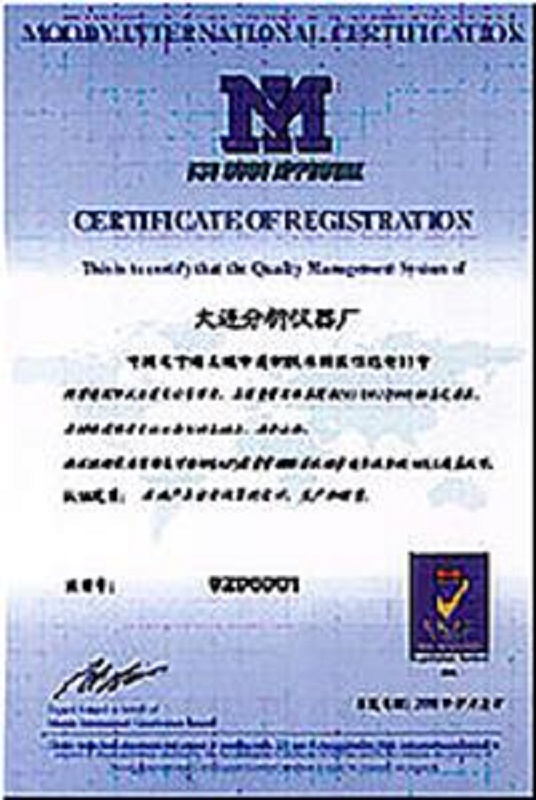
Certifications | ISO 9001:2015 certified; products meet ASTM, ISO, GB/T, SH/T standards |
Export Markets | Southeast Asia, Middle East, Europe, South America, Africa |
Key Clients | Lubricant and grease manufacturers, third-party testing centres, tribology laboratories, university research institutions |
Custom Services | OEM/ODM support available |
We don't just sell instruments. We provide complete testing solutions with 48-hour technical support response and lifetime remote assistance.
Standard Compliance: Fully conforms to GB/T 3142, SH/T 0189, SH/T 0202, and SH/T 0204 standards
CE Marking: Available upon request (certificate number can be provided)
Calibration Certificate: Each unit comes with a factory calibration report traceable to national standards
Q1: What is the principle of the four-ball method?
A: The four-ball method uses four standard steel balls of the same diameter (12.7mm). Three balls are fixed in the oil cup and immersed in the lubricant, forming an "oil cup". The fourth ball (upper ball) rotates at a specified speed under axial load, creating point-contact friction with the three stationary lower balls. By measuring wear scar diameter, maximum non-seizure load (PB), welding load (PD), and combined wear value (ZMZ), the anti-wear performance and extreme pressure load-carrying capacity of the lubricant are evaluated.
Q2: What do PB, PD, and ZMZ represent?
A: PB (Maximum Non-Seizure Load) — represents oil film strength, i.e., the highest load at which no seizure occurs between the upper and lower balls under specified conditions; PD (Welding Load) — represents the ultimate load-carrying capacity of the lubricant, i.e., the lowest load at which welding of the balls occurs; ZMZ (Combined Wear Value) — comprehensively reflects the load-carrying capacity of the lubricant throughout the entire process from non-seizure to welding. These three indicators evaluate the extreme pressure and anti-wear performance of lubricants from different dimensions.
Q3: What samples do GB/T 3142, SH/T 0189, SH/T 0202, and SH/T 0204 apply to respectively?
A: GB/T 3142 — applies to lubricants (both oils and greases) for load-carrying capacity determination; SH/T 0189 — applies to lubricating oils for anti-wear performance determination; SH/T 0202 — applies to greases for extreme pressure performance determination; SH/T 0204 — applies to greases for anti-wear performance determination. The DFYF-907 simultaneously complies with all four standards, meeting comprehensive testing requirements for both lubricating oils and greases with one instrument.
Q4: What is the practical significance of the 1000~2800 r/min adjustable speed range?
A: Different equipment and operating conditions subject lubricants to different friction speeds — low-speed heavy-load (such as gearbox start-up conditions) and high-speed light-load (such as high-speed bearing operation) place entirely different demands on lubricant anti-wear performance. The DFYF-907's wide adjustable speed range enables laboratories to simulate diverse real-world operating conditions from low to high speeds, providing test data with greater engineering relevance.
Q5: What are the advantages of lever-type loading over hydraulic loading?
A: Lever-type loading precisely transmits force through the lever ratio with intuitive operation, stable force application, and excellent repeatability. It requires no complex hydraulic pump stations or piping systems, resulting in low failure rates and low maintenance costs — suitable for long-term stable laboratory operation. While hydraulic loading offers higher automation, it involves complex systems with higher maintenance costs and potentially larger force fluctuations.
Q6: Why is temperature control (ambient~200°C) needed?
A: Temperature is a critical factor affecting lubricant performance. As temperature rises, oil viscosity decreases, oil film strength diminishes, and anti-wear performance may change significantly. The DFYF-907's intelligent temperature control system enables simulation of lubricant performance under different temperature conditions, providing essential data support for high-temperature applications (such as engine oils, high-temperature bearing greases, etc.).
Q7: What is your delivery time?
A: Standard delivery is 20–25 working days after order confirmation. For urgent needs, please contact us to check current stock.
Q8: What is your warranty policy?
A: 12 months from the date of shipment, excluding consumables (standard steel balls, etc.). Lifetime technical support is included.
Per GB/T 3142 / SH/T 0189 / SH/T 0202 / SH/T 0204, here is the typical procedure for anti-wear/extreme pressure testing using the DFYF-907:
Step | Action | Details |
1 | Steel ball preparation | Clean and dry four 12.7mm standard steel balls — three fixed in the oil cup, one installed in the spindle collet |
2 | Sample loading | Pour the lubricating oil or grease sample into the oil cup, ensuring ball contact points are fully immersed in the lubricant |
3 | Parameter setting | Set test speed (1000~2800 r/min), test load (60N~8kN), test temperature (ambient~200°C), and test duration (1s~99h99min) |
4 | Loading and start | Apply the set load via the lever-type loading system and start spindle rotation |
5 | Friction operation | The upper ball rotates at the set speed, creating point-contact friction with the three lower balls; the instrument automatically records operating status |
6 | Test completion | Automatically stops at the set time (overload protection device automatically stops in case of welding) |
7 | Wear scar measurement | Remove the three lower balls and measure wear scar diameter with the dedicated high-precision microscope |
8 | Result calculation | Calculate PB, PD, ZMZ, or wear scar diameter (D value) from wear scar diameter and test conditions |
Multi-standard compatibility, wide adjustable speed range (1000~2800 r/min), high-precision lever loading (±1%), intelligent temperature control (ambient~200°C), and dedicated microscope for rapid measurement — the DFYF-907 provides comprehensive lubricant performance testing solutions from extreme pressure to anti-wear.

You Need | DFYF-907 Delivers |
Standard compliance | GB/T 3142, SH/T 0189, SH/T 0202, SH/T 0204 — multi-standard in one |
Speed range | 1000~2800 r/min — continuously adjustable, accuracy ±40 r/min |
Loading method | Lever-type manual loading — accurate and reliable force application |
Test force range | 60N ~ 8kN — accuracy ±1% |
Temperature range | Ambient ~ 200°C — intelligent temperature control |
Timer range | 1 second ~ 99 hours 99 minutes — flexible adaptation |
Wear scar measurement | Dedicated high-precision microscope — rapid and accurate |
Safety protection | Automatic overload protection stop |
After-sales support | 12-month warranty + lifetime remote support |
Trust | Established 1978, ISO 9001 certified |
Dalian Analytical Instrument Factory
Carlos Zhang (Overseas Sales Manager)
�� Tel / WhatsApp / WeChat: +86 18740265556
�� Email: 54639288@qq.com
�� Website: https://www.analyzer-dfy.com
�� Address: 1-1, No.107 Guangxian Road, High-Tech Zone, Dalian, Liaoning, China (Zip code: 116023)
We don't write empty words. We provide data, facts, standards, and solutions – because that's what B2B buyers and Google truly value.