
Language
Search
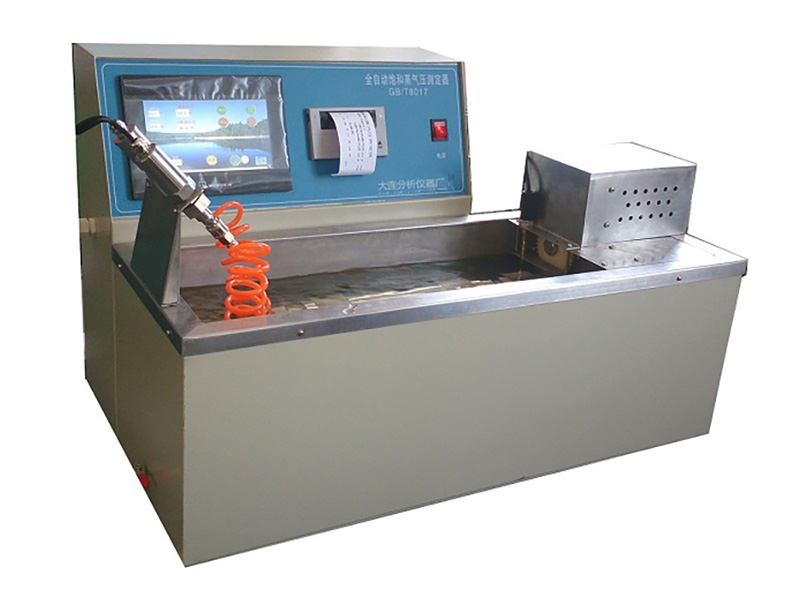
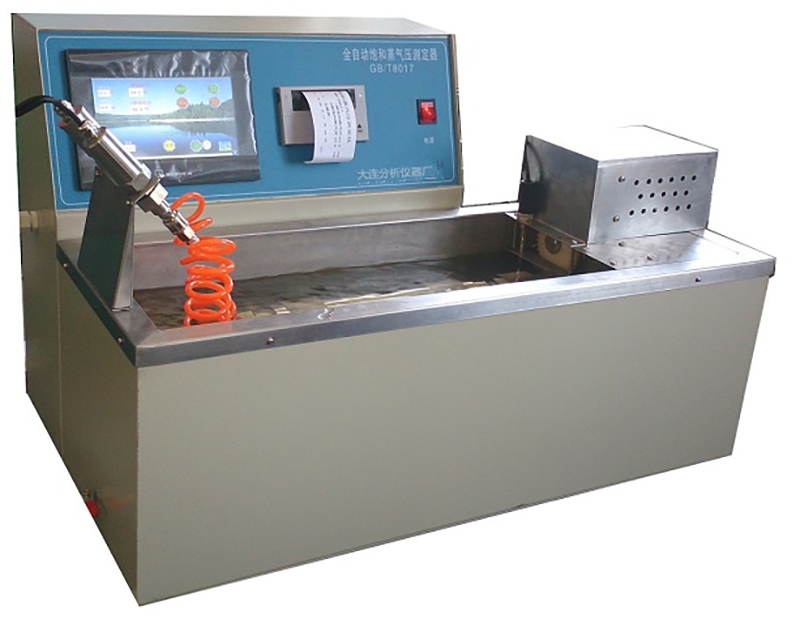
Vapor pressure is a key indicator for assessing the volatility and safety of gasoline, crude oil, and other light petroleum products. This vapor pressure tester is manufactured in line with GB/T 8017 and ASTM D323, two widely recognized standards for Reid vapor pressure (RVP) determination. It is primarily used to evaluate the vapor pressure of volatile fuels and crude oils — an essential parameter for ensuring safe handling, transportation, and storage.
Equipped with a 5-inch LCD interface and an industrial-grade ARM 32-bit embedded processor, the instrument handles the entire testing sequence automatically, minimizing manual intervention.
Temperature is managed by an intelligent control loop. Once the bath stabilizes at the target temperature (e.g., 37.8°C), the user simply presses the start button. After a preset period, the system automatically rotates the test chamber by 350° and reverses direction. A high-circulation stirring pump maintains uniform temperature throughout the bath, eliminating cold spots.
Upon test completion, results can be saved and transferred to a computer via a USB flash drive. This supports digital record-keeping, reduces paper consumption, and aligns with modern laboratory efficiency goals.
The analyzer includes automatic temperature and pressure correction, fault alarms, gas path leakage detection, and an audible/visual alert when a leak is identified. These integrated safety features enhance operator protection and instrument reliability.
Typical Users:
Petroleum refineries and petrochemical labs
Fuel storage and logistics companies
Quality inspection and regulatory authorities
R&D departments focused on fuel formulation and safety
Quality Assurance:
Each unit undergoes factory calibration and performance verification. Our ISO 9001:2000‑certified quality management system ensures consistent product reliability, from initial design through final production.
Operational Benefits:
The combination of a large LCD screen, automated rotation, and built‑in leak detection reduces operator workload and improves test-to-test repeatability. USB data export simplifies documentation and regulatory audit trails.
| Parameter | Specification |
|---|---|
| Power Supply | AC220V ±10%, 50Hz |
| Heating Power | 2000 W |
| Temperature Control Accuracy | 37.8°C ±0.1°C |
| Pressure Range (Gauge) | 0 ~ 200 kPa |
| Temperature Sensor | Pt100 |
| Number of Test Cells | 2 |
| Rotation Angle | 350° |
Our vapor pressure tester reflects the latest advances in automation and measurement accuracy. We continuously invest in research and development to remain at the forefront of petroleum testing technology.
We also offer customization services — the analyzer can be adapted to meet the specific needs of a large refinery or a small laboratory, with comprehensive technical support included.
Beyond the instrument, we provide:
Installation & training – On-site or remote assistance to help your team operate the equipment efficiently
After-sales support – Responsive hotline, spare parts supply, and maintenance services
Regulatory compliance assistance – Guidance to help you meet ASTM D323, GB/T 8017, and other applicable standards

Our company follows a people-oriented management philosophy, values professional collaboration, and places the right people in the right roles. We encourage talent development and have built a rigorous, responsible business team dedicated to delivering high-quality products and excellent service.
Over the years, with the support of Sinopec Group, China Natural Gas Group, various research institutes, and customers across multiple industries, our factory has continued to grow and innovate. In 2002, Dalian Analytical Instrument Factory obtained ISO 9001 (2000) certification, ensuring reliable quality assurance across the design, production, and service of petroleum-related high/low temperature instruments as well as general laboratory thermostatic equipment.
This vapor pressure analyzer combines automated operation, intelligent temperature control, paperless data management, and comprehensive safety diagnostics — making it a practical and reliable choice for any laboratory or production facility requiring RVP measurement in compliance with ASTM D323 and GB/T 8017.